LANGUAGE


Capital allocation in the scaffold rental sector relies on managing asset depreciation against sustained rental yield. When a rental firm capitalizes a new fleet of tube and fitting scaffolding, the steel tubes and timber boards represent the highest initial expenditure, but the scaffold fittings dictate the ongoing operational expense. The procurement decision between drop-forged and pressed steel scaffold couplers establishes the baseline for a fleet's attrition rate, maintenance labor, and ultimate Total Cost of Ownership (TCO).
This financial analysis shifts the engineering discussion of metallurgical strength into commercial metrics. It examines how the physical durability of forged fittings against pressed steel variants influences Capital Expenditure (CAPEX), Operational Expenditure (OPEX), site loss rates, and residual asset value, providing fleet managers with a quantitative framework to evaluate true long-term profitability.
Direct Answer: How does TCO compare between forged and pressed scaffold fittings?
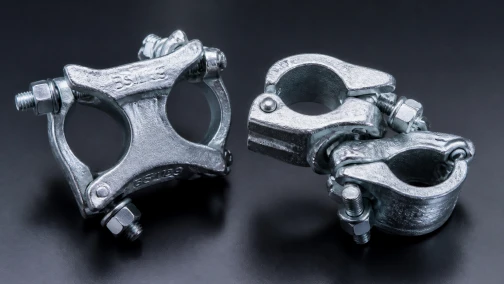
While pressed steel scaffold fittings offer a 15% to 25% lower initial purchase price (CAPEX), their Total Cost of Ownership (TCO) surpasses drop-forged fittings within 36 to 48 months of active rental deployment. The TCO calculation encompasses initial cost, maintenance labor, replacement cycles due to mechanical deformation, and scrap value. Pressed steel fittings suffer severe attrition from bent ears and crushed bodies caused by over-torquing and site impacts, resulting in a typical fleet survival rate of 40% after five years. Conversely, drop-forged fittings easily absorb uncontrolled pneumatic impacts and drop shocks without structural distortion. A high-quality drop-forged fleet maintains an 85% survival rate over a ten-year lifespan, requiring only localized T-bolt replacements. For rental operations targeting a lifecycle beyond three years, drop-forged fittings deliver a decisively superior Return on Investment (ROI).
CAPEX: The initial procurement dynamic
The upfront acquisition cost defines the first variable in the TCO equation. Pressed steel fittings are manufactured via high-speed cold-stamping. This process utilizes thinner gauge steel coil (typically 4.0 mm) and relies on rapid, automated mechanical folding. This high-volume efficiency, combined with lower raw material mass, allows manufacturers to price pressed steel couplers aggressively. For a rental startup heavily constrained by initial credit lines, outfitting a 1,000-tonne scaffold fleet with pressed steel fittings represents a substantial, immediate reduction in capital expenditure.
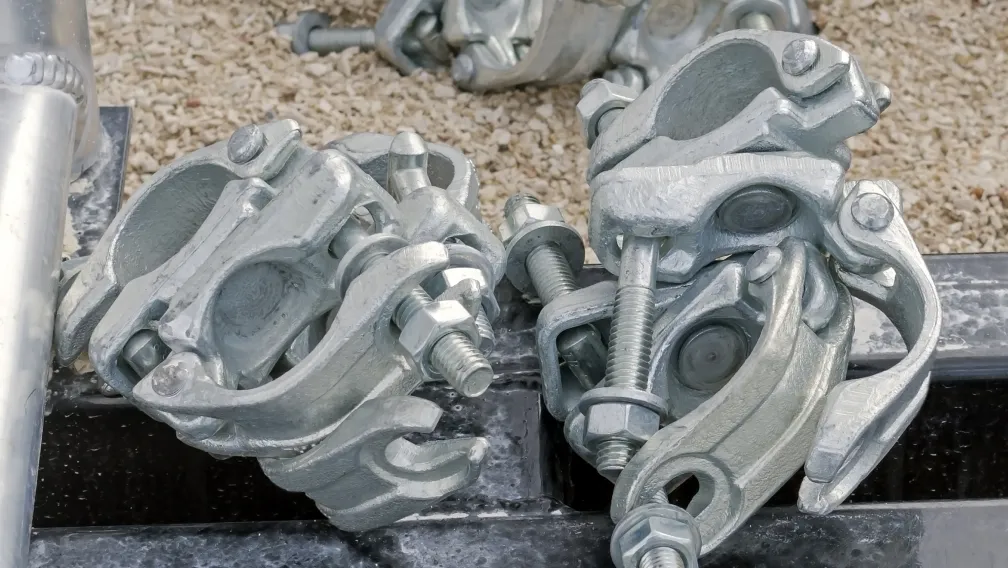
Drop-forged fittings are fundamentally more expensive to produce. The process requires cutting solid steel billets, heating them to 1,200°C in induction furnaces, and striking them in closed dies under massive hydraulic hammers. A forged EN 74 Class B scaffold double coupler contains approximately 30% more steel mass than a pressed equivalent. This material density and the energy-intensive manufacturing process create a premium purchase price. However, evaluating a rental asset based solely on initial CAPEX ignores the reality of construction site abuse.
Mechanical deformation and the OPEX burden
The primary driver of OPEX in a scaffold yard is the labor associated with inspecting, repairing, and culling damaged equipment returning from off-hire. Scaffold fittings are subjected to extreme abuse. Scaffolders routinely drop them from heights of 10 to 30 meters onto concrete slabs. More critically, erection crews use unregulated pneumatic or battery impact wrenches to tighten the T-bolts, frequently exceeding the mandated 50 Nm torque limit.
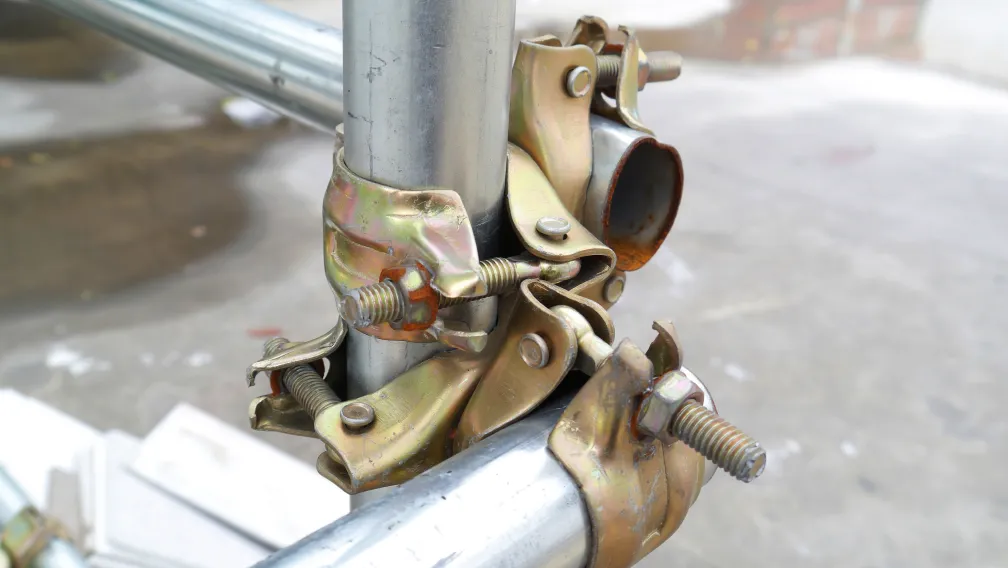
When a pressed steel fitting is over-torqued or dropped, the stamped "ears" that secure the T-bolt bend inward. Pressed steel lacks elastic memory; the deformation is permanent. Upon return to the yard, yard workers must identify and discard these warped fittings, as a bent ear prevents the bolt from seating squarely, stripping the thread during the next deployment. This creates a relentless cycle of continuous OPEX: labor to cull the damaged stock, and recurring CAPEX to replace the culled inventory.
Drop-forged fittings neutralize this OPEX drain. The solid, dense grain structure of a forged coupler easily absorbs a 15-meter drop impact without cracking. When subjected to severe over-torquing (e.g., 90 Nm), the robust forged ears do not yield; instead, the replaceable T-bolt stretches or snaps. In the rental yard, returning a forged fitting to active service simply requires discarding the snapped 50-cent bolt and inserting a new one, preserving the $3.00 forged body indefinitely.
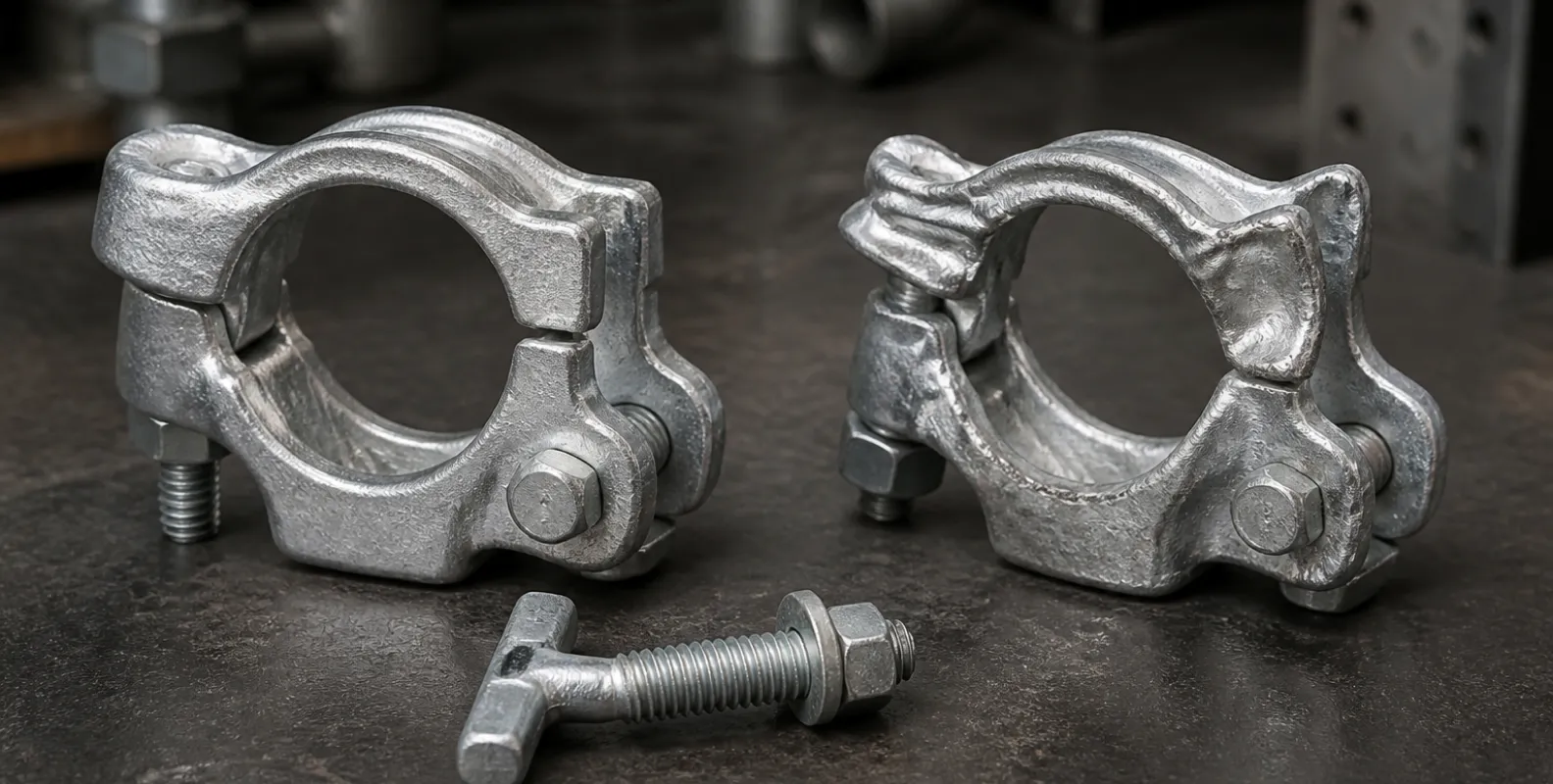
Fleet attrition rates and lifespan projections
Fleet attrition is the percentage of inventory permanently lost to mechanical destruction (excluding theft) over a financial year. Actuarial data from major European and Middle Eastern rental fleets highlights a stark divergence in attrition rates based on manufacturing methods.
A fleet operating strictly with pressed steel fittings typically experiences an annual attrition rate of 12% to 18%. In environments characterized by aggressive, high-speed erection—such as industrial shutdowns or petrochemical maintenance—the physical crushing of pressed scaffold swivel couplers accelerates. By year five, a pressed steel fleet often requires a complete recapitalization to maintain its original rental volume.
In contrast, a drop-forged fleet generally sustains an annual attrition rate of 2% to 4%, primarily attributed to severe, localized accidental impacts (e.g., being crushed by a forklift). The core forged bodies routinely remain in continuous, active rental service for 15 to 20 years. This extreme longevity allows fleet accountants to fully fully depreciate the asset on the balance sheet while it continues to generate pure, unencumbered rental income for a further decade.
The impact of ISO 1461 Hot-Dip Galvanizing (HDG)
Mechanical strength must be paired with environmental resilience to achieve a low TCO. Zinc plating (electro-galvanizing) provides a thin, aesthetic coating that quickly erodes in coastal or industrial environments, leading to seized threads and rusted hinges within 24 months. Rust acts as an abrasive, destroying the bolt threads and rendering the fitting useless, regardless of its underlying steel strength.
Professional rental fleets specify Hot-Dip Galvanizing (HDG) to ISO 1461 standards, which bonds a thick, metallurgical zinc layer to the steel. HDG adds a slight premium to the initial CAPEX but effectively halts environmental OPEX. Forged fittings, with their thicker mass, accept and retain HDG coatings exceptionally well, ensuring the internal threads and hinge pins remain fluid and rust-free over a 15-year exterior lifecycle.
Calculating Residual Asset Value (RAV)
At the end of a determined financial lifecycle, fleet managers must liquidate older stock to modernize the yard. Pressed steel fittings that survive a five-year cycle are typically battered, rusted, and geometrically warped. They possess zero functional resale value on the secondary market and are sold strictly for raw scrap weight.
Drop-forged fittings maintain a high Residual Asset Value (RAV). A 10-year-old forged coupler, provided it is HDG coated and fitted with new T-bolts, retains its full EN 74 Class B structural rating. It is visually identical and mechanically equivalent to a new fitting. Consequently, used forged fittings command strong prices on the secondary market, often returning 30% to 40% of their original acquisition cost. This high RAV fundamentally subsidizes the initial CAPEX premium when calculating the finalized TCO.
Working with Lengge
Lengge supports major scaffold rental operators globally by manufacturing heavy-duty, drop-forged scaffold fittings engineered for multi-decade lifecycles. Our production facilities maintain strict adherence to EN 74 Class B slip testing, utilizing closed-die induction forging and ISO 1461 compliant hot-dip galvanizing to eliminate fleet attrition caused by mechanical deformation and environmental corrosion.
We provide comprehensive load data, mill test traceability, and volume pricing structures designed to lower your fleet's Total Cost of Ownership. To discuss outfitting your rental yard with premium, high-RAV forged inventory, submit your fleet specifications through our contact page for a detailed structural and financial proposal.
-

Lengge
Cantilever Scaffolding System Manufacturer
Lengge is a China-based factory producing cantilever I-beams, tie rods, couplers, embedded parts and full scaffolding accessories. We supply contractors, wholesalers and rental companies in over 50 countries from our own production facility in Hebei.