LANGUAGE


The physics of vertical shoring in concrete construction
Pouring a suspended concrete floor slab introduces massive temporary dead loads to a building's structure. Wet concrete, steel rebar matrices, and heavy timber formwork must be held entirely rigid until the concrete cures and reaches its design strength. Site engineers deploy temporary vertical shoring networks to absorb these vertical forces and transfer them safely to the cured floors below. The primary component executing this load transfer in modern construction is the adjustable steel prop, replacing traditional fixed-length timber logs.
Steel props allow exact millimeter adjustment on site. This capability absorbs uneven floor levels and precise architectural camber requirements without requiring workers to cut material or use wooden wedges. The mechanical integrity of these vertical supports directly dictates the safety of the pouring operation. A single collapsed prop forces adjacent props to absorb unintended weight, triggering a progressive structural failure across the entire formwork deck.
Direct Answer: What is an adjustable steel prop?
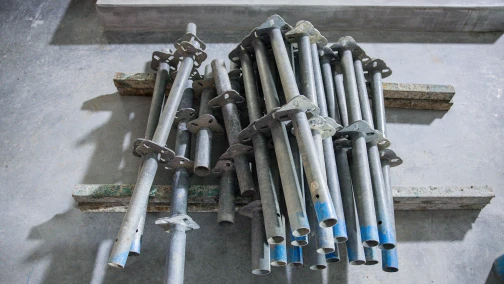
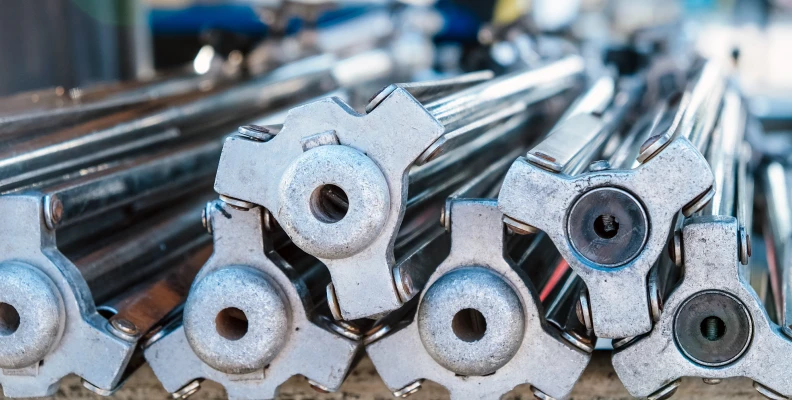
An adjustable steel prop (also known as a shoring prop or acrow prop) is a telescopic tubular steel support used in construction to temporarily hold vertical loads, primarily concrete formwork. It consists of a wider outer tube, a narrower inner tube with punched holes, a threaded collar, a high-capacity adjustment nut, and a shear pin. The inner tube slides out to the approximate required height and is locked by inserting the pin. The worker then rotates the collar nut along the threaded section to achieve exact millimeter height adjustment and apply pre-tension against the load.
Tube dimensions and heavy-duty configurations
Load capacity begins with the physical geometry of the steel tubes. Adjustable steel props operate on a telescopic mechanism. The physical overlap between the inner and outer tube governs the rigidity of the prop when extended.
Manufacturers categorize props into light-duty, medium-duty, and heavy-duty classes based on tube diameter and wall thickness. A standard light-duty configuration often utilizes a 40mm outer diameter (OD) inner tube sliding inside a 48mm OD outer tube, with wall thicknesses around 1.8mm to 2.0mm. These serve adequately for low-height residential builds.
For commercial heavy civil engineering, site managers specify heavy-duty configurations. These utilize a 48mm OD inner tube and a 60mm OD outer tube. The wall thickness for heavy-duty props ranges from 2.5mm to 3.0mm, using Q235B or Q355B grade carbon steel. The larger cross-sectional area exponentially increases the section's moment of inertia, preventing the steel column from bowing under heavy concrete loads.
Cold-rolled vs. cut threads: Impact on tensile strength
The threaded section of the prop takes the full abrasive wear of the collar nut during height adjustment. B2B buyers must evaluate how the manufacturer produces this thread.
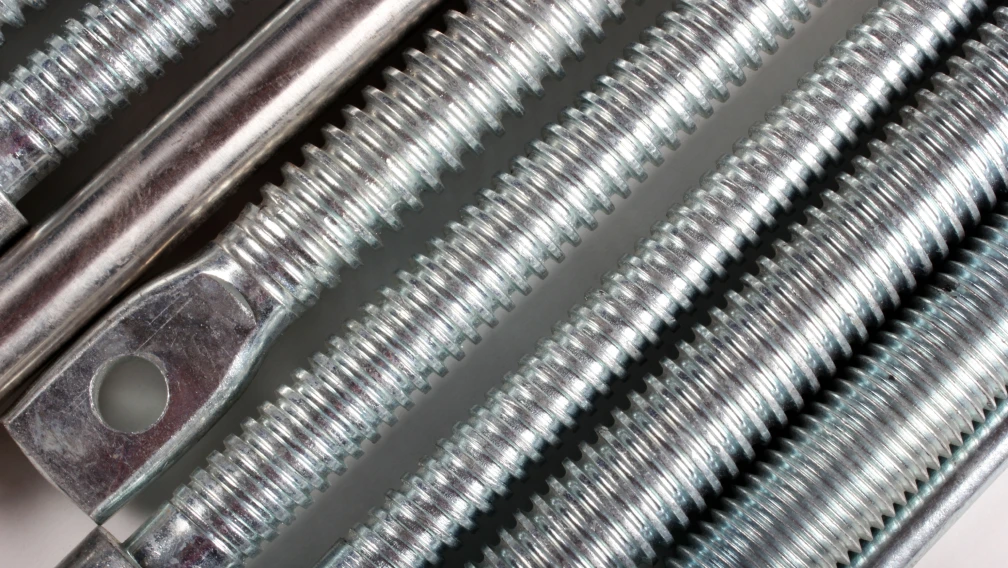
Low-tier props use cut threads. A lathe mechanically slices away steel to form the thread profile. This process removes base material, reducing the wall thickness of the tube exactly at the point of maximum mechanical stress. Under heavy vertical loads, a cut thread acts as a failure point.
High-quality adjustable props utilize cold-rolled threads. Heavy industrial rollers compress the steel tube to form the thread profile without removing any material. This cold-working process alters the metallic grain structure, actually increasing the localized tensile strength and surface hardness of the thread. A rolled thread resists stripping under heavy dynamic loads and prolongs the lifespan of the prop across multiple projects.
Load capacity degradation at maximum extension
Structural engineers do not assign a single static load rating to an adjustable steel prop. The maximum safe working load (SWL) degrades severely as the prop extends toward its maximum height. This physical limitation is governed by Euler's critical load formula for column buckling.
When a prop remains fully compressed (e.g., 2.0 meters), the steel acts as a short, rigid block, offering its maximum compressive strength. As workers extend the inner tube to 3.5 or 4.0 meters, the slenderness ratio of the column increases. The prop becomes susceptible to lateral buckling. A heavy-duty prop that easily supports 30 kN at 2.0 meters may safely support only 12 kN at its 4.0-meter maximum extension. Procurement teams must reference the manufacturer's certified load testing tables to match the prop's capacity against the project's required extension heights, rather than relying on the base compressed capacity.
Horizontal bracing to prevent lateral buckling
To counteract load degradation at high extensions, site crews integrate the individual props into a rigid three-dimensional matrix. They install horizontal standard scaffold tubes connecting the vertical props at their midpoints.
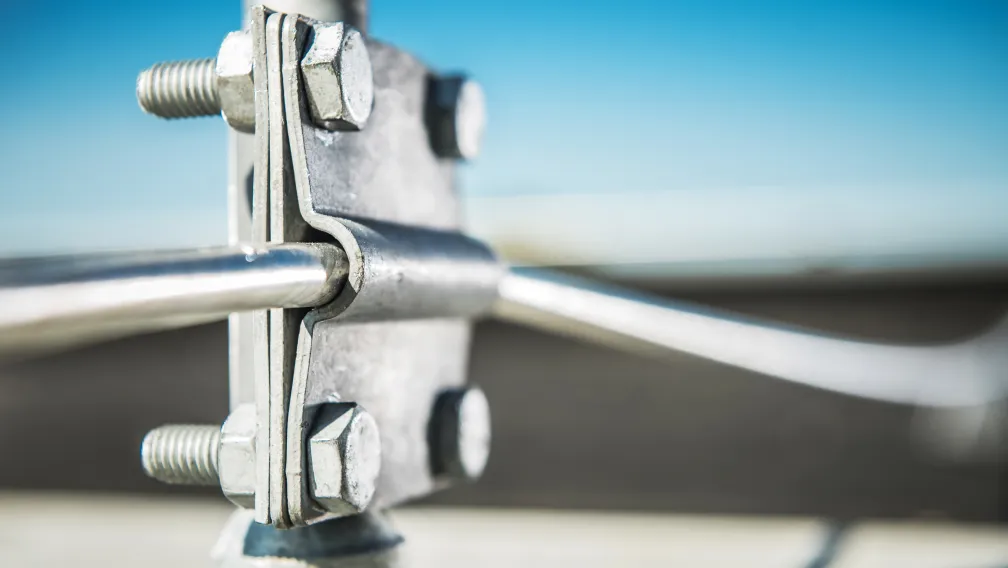
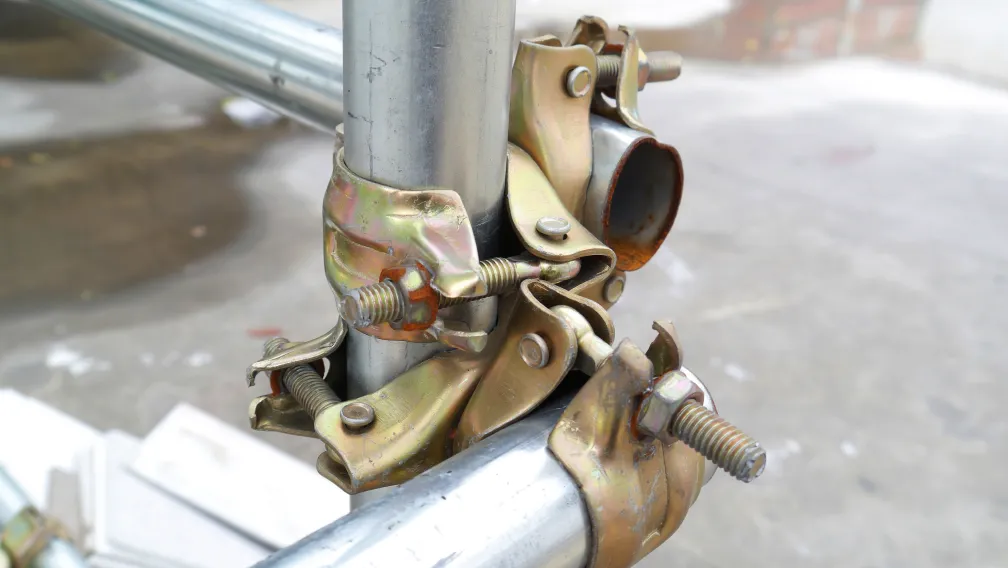
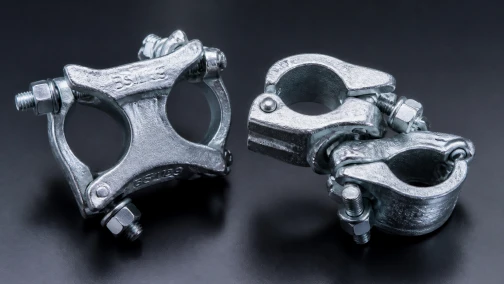
This horizontal lacing halves the unbraced length of the prop, radically changing the slenderness ratio and forcing the system to behave mechanically like a rigid tower rather than independent weak columns. To execute this connection securely, workers use heavy-duty scaffold double couplers to clamp the horizontal bracing tubes directly to the outer tubes of the props. For diagonal cross-bracing, which resists wind shear and lateral concrete flow forces, scaffold swivel couplers provide the necessary 360-degree articulation.
Pin shear strength and collar nut metallurgy
The entire weight of the concrete slab passes through two tiny components: the adjustment nut and the locking pin. These two elements represent the most critical mechanical bottlenecks in the prop's design.
The Locking Pin: Standard straight pins can dislodge due to vibration from concrete vibrators or site machinery. Professional scaffolding systems utilize a G-pin (hook pin). The hooked design wraps around the outer tube, physically preventing accidental dislodgment. The pin must be forged from high-tensile steel to resist catastrophic shear failure.
The Collar Nut: The nut rides the thread and holds the pin. Welded steel nuts or brittle cast iron nuts can crack under sudden shock loads. High-specification props utilize ductile iron (nodular cast iron) collar nuts. Ductile iron contains spherical graphite structures that absorb impact and stretch slightly under extreme pressure without shattering, providing a massive safety margin during concrete pours.
EN 1065 European standards and compliance
International high-rise projects demand certified compliance to prevent liability. The benchmark regulatory standard for telescopic steel props is EN 1065. This European standard categorizes props into distinct classes (Class A, B, C, D, and E) based on their characteristic load-bearing capacity at specific extension lengths.
For example, an EN 1065 Class C prop must maintain a strict characteristic yield capacity at its maximum extension, guaranteeing baseline performance regardless of how far the inner tube projects. Props engineered to these standards undergo rigorous destructive testing, including pin shear tests, thread stripping tests, and full-column buckling tests. Importing uncertified, generic steel props for large-scale commercial formwork introduces severe structural risks and fails routine municipal safety audits.
Anti-corrosion treatments for rental lifespans
Adjustable steel props are capital assets. Scaffolding rental companies and large contractors expect a lifespan of five to ten years across multiple harsh environments. The alkaline nature of wet cement rapidly attacks raw steel, leading to deep pitting and wall thickness reduction.
Basic dip-painting offers minimal protection and scratches off during the first transport cycle. Powder coating provides a hard, resilient finish suitable for standard building environments. However, for maximum longevity, especially in coastal regions or heavy civil works, hot-dip galvanizing (HDG) is the optimal specification. The HDG process coats the inner and outer tubes, inside and out, with a thick, metallurgically bonded zinc layer (typically 60-80 microns). This prevents internal tube rusting—a hidden defect that silently compromises the structural integrity of painted props.
Procurement rules: Defeating negative tolerance fraud
The most persistent issue in B2B steel prop procurement is the practice of extreme negative tolerance. Unverified suppliers will quote a heavy-duty 48/60mm prop with a theoretical 3.0mm wall thickness to win a contract based on price. During production, they roll the steel tubes to a 2.4mm actual thickness. This shaves massive amounts of raw material weight and cost off the order, but completely destroys the compressive strength of the prop.
B2B buyers must enforce strict procurement rules. Contracts must specify billing by actual scaled weight, not theoretical piece count. A standard heavy-duty 3.5-meter prop possesses a known mathematical weight based on steel density. If a shipping container weighs 15% less than the engineering calculation, the supplier has executed a negative tolerance fraud. Always mandate a pre-shipment inspection focusing on digital caliper checks of the tube wall thickness and the thread root diameter.
The prop sizing system and how to read it
Adjustable props are sold by size numbers that encode their height range, and reading the system correctly prevents the classic ordering error of buying props that cannot reach the slab. Under the long-established BS 4074 convention, a No. 0 prop covers roughly 1.1 to 1.8 m, a No. 1 spans 1.8 to 3.1 m, a No. 2 runs 2.0 to 3.4 m, a No. 3 reaches 2.4 to 3.9 m, and a No. 4 extends 3.2 to 4.9 m. The overlap between adjacent sizes is deliberate, giving the site flexibility when slab heights vary across a floor plate. The selection rule worth teaching every buyer: choose the size that keeps the working height in the lower half of the prop's range whenever possible, because load capacity falls as extension grows, and a prop working near its closed length is both stronger and stiffer than the same prop stretched near its limit. For slab heights above five meters, the answer is a shoring tower or frame system, and any quotation offering a single prop for those heights should be questioned before it is priced.
How capacity degrades with extension
The load table on a prop datasheet is really a curve, and the shape of that curve follows Euler's buckling mathematics. A heavy-duty prop might carry 40 kN at its minimum extension, 30 kN at mid-range, and 20 kN fully extended, because the slender inner tube increasingly governs stability as it telescopes outward. Two practical consequences follow. First, the design load per prop must be checked against the capacity at the actual working extension, not the headline figure in the brochure; a formwork layout calculated at the maximum rating will fail quietly if the props are extended beyond the assumed height. Second, wall thickness drives the curve. The difference between a 2.3 mm and a 2.6 mm wall in the inner tube is not a ten-percent change in capacity but often a twenty-percent one, because buckling resistance scales with the moment of inertia of the tube section. This is the engineering reason behind the wall-thickness fraud discussed in procurement: shaving the wall is the cheapest way to fake a prop, and the most dangerous.
Eccentricity, plumb, and installation discipline
A prop loaded perfectly concentrically delivers its calculated capacity; the same prop loaded a few millimeters off-center or leaning a degree off vertical loses a serious fraction of it. Field studies and standard guidance both converge on the tolerances: props should stand plumb within about one degree, and the load should enter through the center of the head plate, because eccentricity adds bending to the axial compression and buckling arrives far earlier. The site disciplines that deliver this are unglamorous. Base plates belong on sound, level timber sole boards that spread the point load into the ground or the slab below; a prop standing directly on rough fill punches through and tilts. Head plates must seat fully against the formwork bearer, with timber wedges only as minor adjustment and never as primary load paths. And props belong in straight rows aligned with the bearers, because a prop offset from the bearer line carries double the tributary load of its neighbor. Supervisors who walk the line with a plumb rule before the pour earn their wages in the incidents that never happen.
Striking times and the back-propping decision
Props earn their cost back through the speed of the construction cycle, and the striking decision is where that speed meets concrete science. The traditional rule permits striking vertical formwork once the concrete reaches the strength to carry its own weight plus construction loads, which for typical mixes means around seven days at 20 degrees Celsius, confirmed by cube or cylinder tests rather than the calendar. Fast cycles tempt contractors into early striking, and the professional answer is back-propping: strike the formwork panels to reuse them, but leave a reduced grid of props supporting the young slab while it gains strength. The redesign matters here, because removing half the props doubles the load on the remainder, and the back-propping layout needs its own calculation rather than a casual every-other-prop removal. Multi-floor sequences compound the question, since freshly struck slabs below must carry the construction loads of the floor above; projects that schedule three floors of props for two floors of work are buying schedule safety with rental cost, and the trade is usually worth it.
Rent, buy, and the repair economics
Adjustable props sit at the center of one of construction's classic asset decisions, and the arithmetic rewards buyers who think in cost per use rather than price per unit. A quality prop with cold-rolled threads, ductile-iron collar, and 2.6 mm walls costs perhaps thirty percent more than a budget equivalent, but survives several times the service cycles, because the wearing parts are the ones that quality manufacturing protects. Rental fleets know this math intimately, which is why their specifications are worth copying by buyers. The repair dimension favors modular designs: pins, collar nuts, and base plates are replaceable on good props, and a supplier who stocks spare collars and pins extends the fleet life for pennies on the replacement dollar. Threads deserve their own maintenance line, since concrete paste left to harden on the thread is the single most common killer of otherwise sound props; a wire brush and oil at demobilization preserves the adjustment action for the next project. Buyers building a long-term fleet should standardize on one prop family so spares, pins, and double couplers used for bracing interchange across the whole inventory.
Receiving inspection for a container of props
The half hour spent inspecting a new prop delivery determines whether the specification you wrote actually arrived. The receiving protocol used by professional formwork contractors covers five checks on a random sample of units. Measure wall thickness with a caliper at the cut end of the inner tube, where the truth is visible without disassembly. Weigh complete props and compare against the calculated weight for the specified dimensions, since negative tolerance shows up instantly on a scale. Cycle the thread through its full travel feeling for tight spots or grinding that indicate poor rolling or weld distortion. Inspect the welds at head and base plates for full fillets without undercut, because these welds carry the entire load path. Finally, function-test the collar nut and pin on every sampled unit, confirming the pin seats through both tube holes and the collar turns without binding. Documenting these checks with photographs on arrival day creates the evidence base that turns a quality complaint into a warranty claim instead of an argument.
Frequently asked questions
What causes the load capacity of an adjustable steel prop to drop when extended?
As the inner tube extends, the overall slenderness ratio of the steel column increases. According to Euler's critical load formula, taller, slender columns are highly susceptible to lateral buckling under pressure. Therefore, the safe working load drops significantly at maximum extension compared to a fully compressed state.
Why are cold-rolled threads better than cut threads on a steel prop?
Cold-rolling presses the thread pattern into the steel tube without removing any material, increasing the local surface hardness and maintaining full wall thickness. Cutting a thread slices away steel, creating a thin, weak point exactly where the maximum mechanical stress concentrates under load.
What is the difference between a standard pin and a G-pin in shoring props?
A standard straight pin can vibrate loose and fall out during heavy concrete pouring or from machinery impact, leading to immediate structural collapse. A G-pin (hook pin) wraps around the outer tube, physically locking itself in place and preventing accidental dislodgment.
Why should collar nuts be made of ductile iron instead of standard cast iron?
Standard cast iron is brittle and can shatter instantly under sudden dynamic shock loads or accidental heavy impact on site. Ductile iron (nodular cast iron) contains spherical graphite, giving it elasticity. It stretches and deforms under extreme pressure without shattering, providing a crucial safety margin.
Can I connect scaffolding tubes directly to an adjustable steel prop?
Yes. Site crews use standard drop-forged scaffold double couplers and swivel couplers to clamp horizontal bracing tubes directly to the outer tubes of the props. This halves the unbraced length of the column, preventing buckling and significantly increasing the load capacity of the formwork matrix.
What does EN 1065 compliance mean for steel props?
EN 1065 is the strict European standard for telescopic steel props. Compliance guarantees that the prop has passed rigorous destructive tests, including pin shear and column buckling tests, and maintains a certified characteristic load-bearing capacity even at its maximum rated extension length.
How do suppliers cheat on steel prop wall thickness?
Unverified suppliers use extreme negative tolerance, rolling the steel tube thinner than the quoted specification (e.g., delivering 2.4mm thickness instead of 3.0mm). This saves them raw material costs but destroys the compressive strength. Buyers prevent this by enforcing contracts based on actual scaled weight rather than theoretical piece counts.
Contact our engineering team for certified shoring solutions
Lengge Steel manufactures certified, heavy-duty adjustable steel props, complete cantilever staging systems, and drop-forged scaffold couplers for the global construction market. Our production lines feature cold-rolled threading, ductile iron collar nuts, and strict negative tolerance controls. We supply international rental fleets and tier-one contractors with fully traceable formwork hardware designed to EN 1065 parameters. Submit your required extension heights, load capacities, and target quantities to our team to receive a detailed wholesale quotation and physical testing reports. Visit our contact page to secure your project supply chain today.
-

Lengge
Cantilever Scaffolding System Manufacturer
Lengge is a China-based factory producing cantilever I-beams, tie rods, couplers, embedded parts and full scaffolding accessories. We supply contractors, wholesalers and rental companies in over 50 countries from our own production facility in Hebei.