LANGUAGE


The operational requirement for precision tensioning in cantilever staging
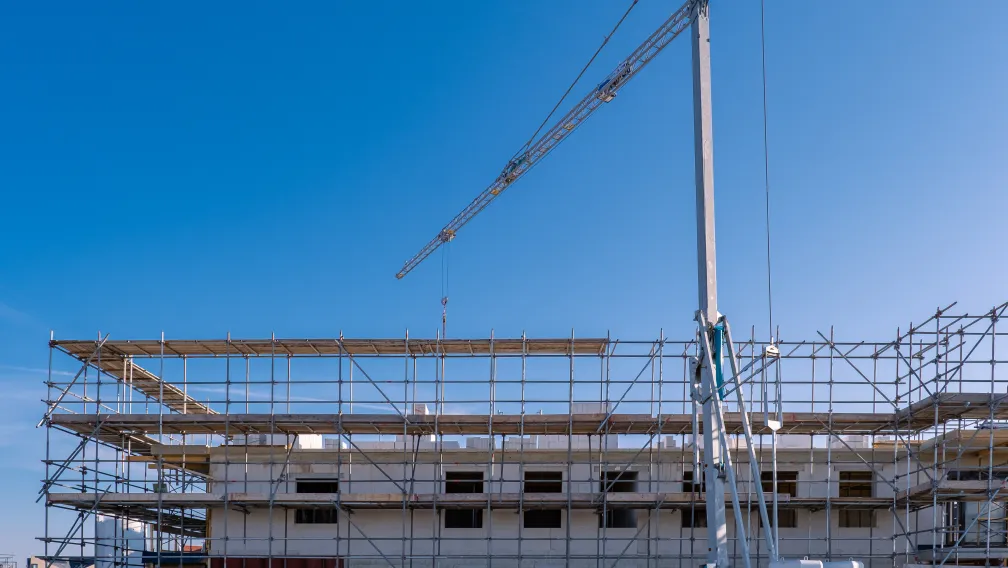
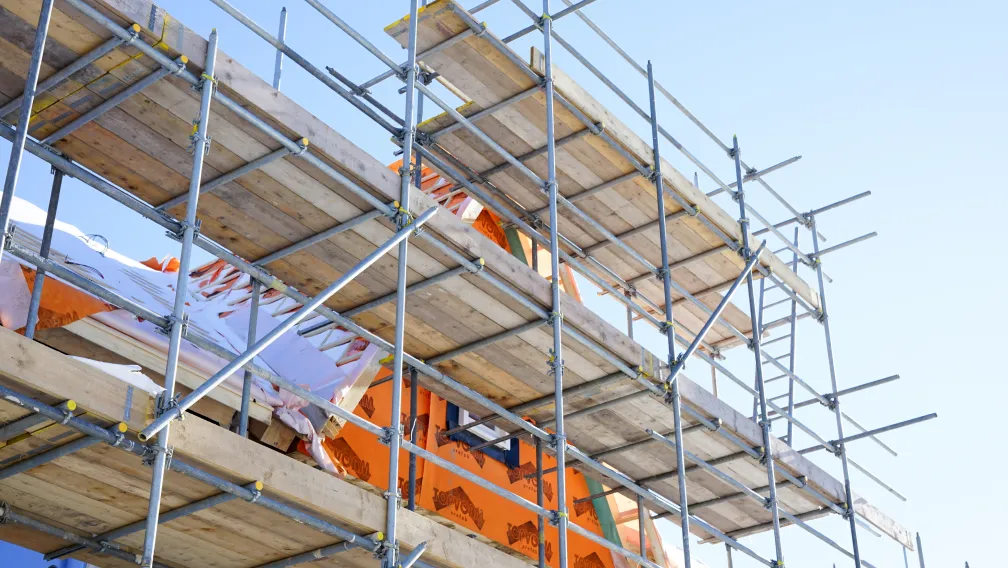
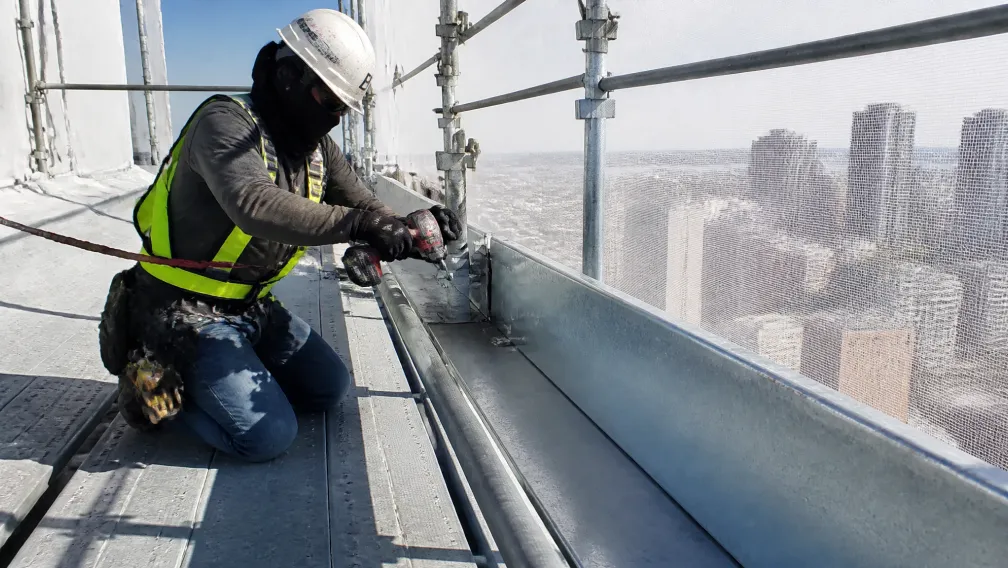
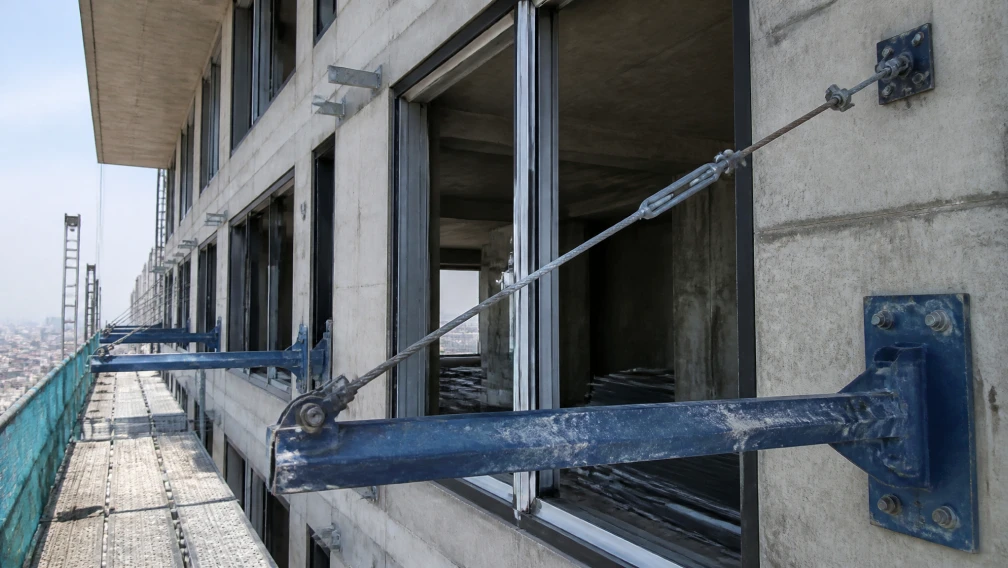
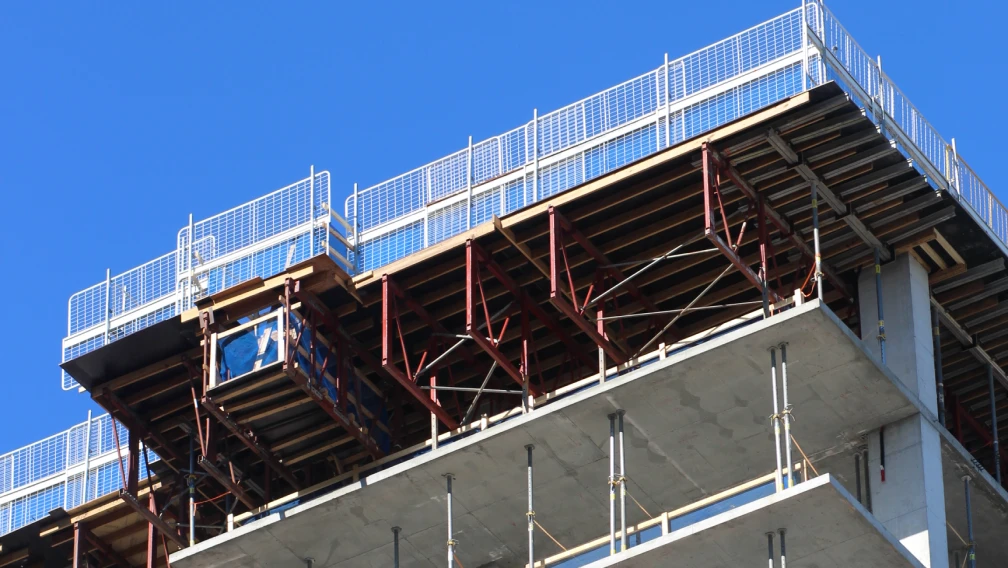
Cantilever scaffolding systems project immense physical mass outward from a building facade. The gravitational forces exerted by the steel tubular matrix, timber decking, and active worker traffic generate a massive rotational bending moment at the base of the structural outrigger beams. To prevent the horizontal cantilever I-beam from deflecting past acceptable engineering limits, site engineers integrate diagonal tension lines connecting the outer tip of the beam to the overhead concrete structure. This diagonal line converts the downward bending force into axial tension.
However, connecting a fixed-length steel rod between two static anchor points provides zero initial load resistance. Due to manufacturing tolerances, structural settlement, and micro-variations in the building's concrete dimensions, a fixed rod will either be too short to install or too long, leaving slack in the line. Slack allows the cantilever beam to deflect downward under load before the tension rod engages, triggering a catastrophic shift in the scaffolding platform's center of gravity. Site engineers resolve this mechanical deficit by integrating a closed-body turnbuckle directly into the tie-rod assembly, providing the ability to retract the rod length and apply exact millimeter-scale pre-tension to the entire structural network.
Direct Answer: What is a closed-body turnbuckle?
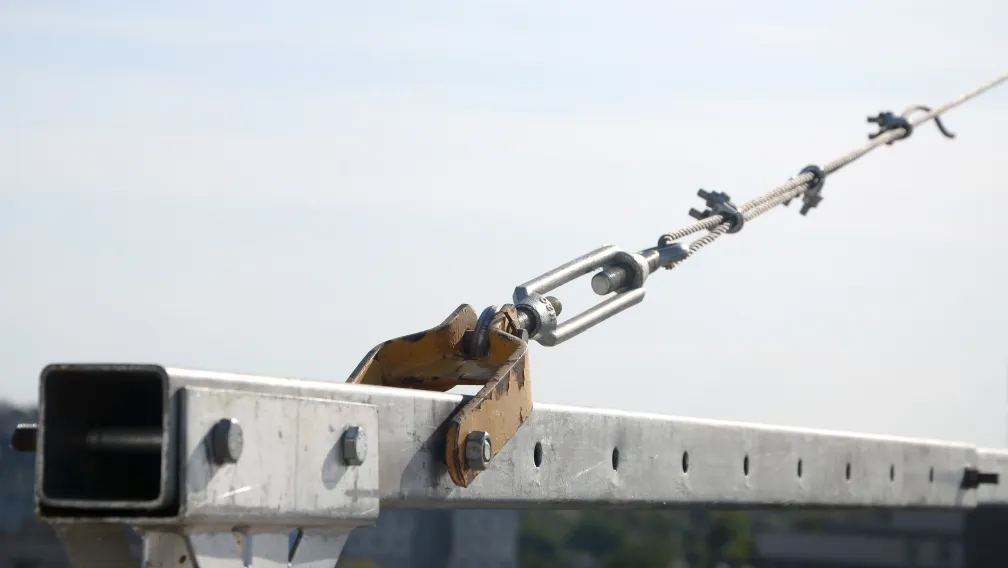
A closed-body turnbuckle is a heavy-duty mechanical tensioning device used to adjust the length and tension of scaffolding tie-rods. It consists of a solid, tubular steel central barrel featuring internal left-hand threads on one end and right-hand threads on the other. Two threaded steel rods (often terminating in forged eyelets or clevis jaws) screw into opposite ends of the barrel. As a worker rotates the central tubular body using a spanner, the opposite-handed threads draw both rods inward simultaneously, removing physical slack and applying immense axial pre-tension to the diagonal cantilever support line. The closed tubular body protects the internal threads from concrete splatter, abrasive dust, and weather-induced thread locking.
Open-frame vs. closed-body architectures in high-rise environments
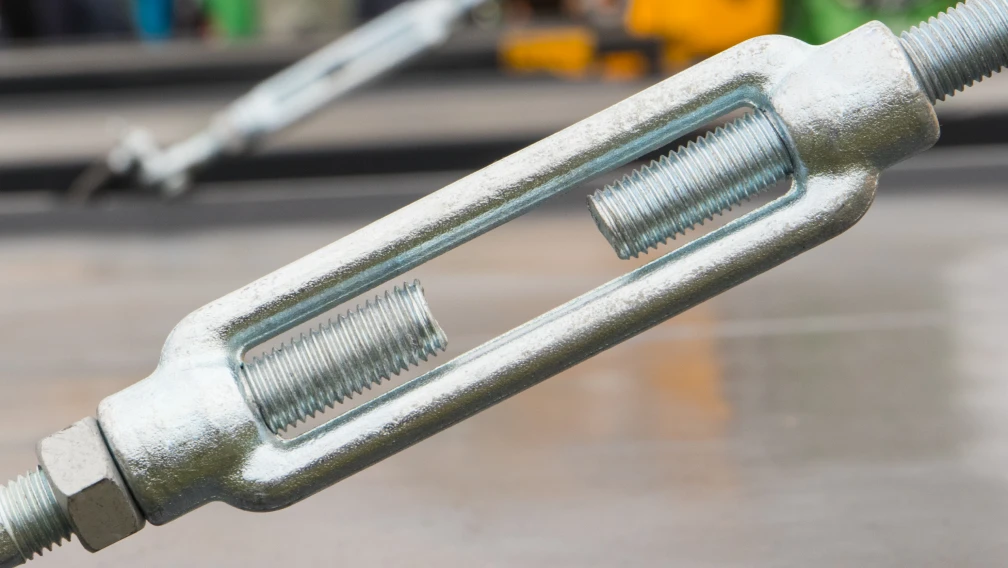
Procurement teams must specify the correct turnbuckle architecture for the target working environment. Standard marine rigging and agricultural tensioning utilize open-frame (or open-body) turnbuckles. These feature a central body comprising two exposed steel loops or a cutout frame, leaving the internal threaded rods completely visible.
While open frames allow easy visual inspection of the thread engagement depth, they present a fatal vulnerability in high-rise concrete construction. High-rise staging areas are flooded with wet concrete slurry, highly alkaline mortar dust, and abrasive debris. When concrete splatter lands on the exposed threads of an open-frame turnbuckle, it cures into a solid mass. The hardened cement locks the threads permanently into the barrel. When workers attempt to dismantle the scaffolding months later, the turnbuckle cannot be loosened, forcing crews to destructively cut the high-tensile tie-rods with oxy-acetylene torches. A closed-body turnbuckle utilizes a continuous, seamless steel tube that shields the internal threads entirely from environmental fouling, guaranteeing the mechanism remains fully adjustable and removable at the end of the project lifecycle.
The mechanical advantage of opposite-handed thread pitches
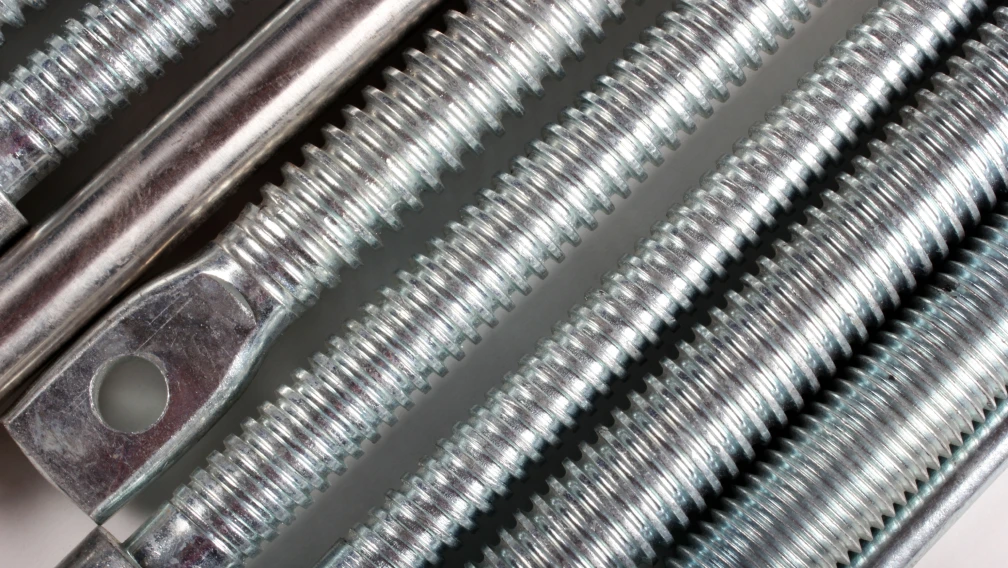
The turnbuckle operates on the mechanical principles of the inclined plane, wrapped spirally to form a thread. The defining engineering characteristic of the turnbuckle is the utilization of opposite-handed threads. One end of the barrel utilizes a standard right-hand (clockwise) thread, while the opposing end is tapped with a left-hand (counter-clockwise) thread.
This specific geometry generates a multiplier effect on the stroke length. If the device uses a standard metric M24 thread with a 3.0mm pitch, one complete 360-degree rotation of the central barrel drives the right-hand rod 3.0mm inward. Simultaneously, the rotation drives the left-hand rod 3.0mm inward. A single rotation of the barrel retracts the overall length of the tie-rod assembly by exactly 6.0mm. This dual-action retraction provides site workers with an immense mechanical advantage, allowing a single laborer with a 500mm spanner to generate several tons of axial tension across the diagonal support line, physically lifting the outer tip of a heavy I-beam.
Calculating pre-camber limits for horizontal outriggers
The primary function of the turnbuckle is to induce "pre-camber" into the cantilever structure. Deflection is unavoidable when thousands of kilograms of scaffolding materials are deposited onto a horizontal beam. If the beam starts perfectly level, the added weight will bend it downward, causing the vertical scaffolding standards to lean dangerously outward toward the street.
Site engineers utilize the turnbuckle to bend the unloaded beam slightly upward before the scaffolding is erected. This upward angle is known as camber. The structural blueprint dictates the exact camber angle, typically ranging from 1 to 2 degrees above horizontal. The worker rotates the turnbuckle until the tip of the cantilever I-beam rises to the calculated elevation. When the heavy tubular scaffolding matrix is subsequently erected on the beam, the dead weight pushes the beam downward. The pre-camber neutralizes this deflection, resulting in a fully loaded outrigger beam that settles perfectly level at zero degrees, maintaining the absolute vertical plumbness of the scaffold facade.
Metallurgy of the central barrel: Seamless steel tube vs. welded pipe
The central closed barrel absorbs the entire axial tension load transmitted by the tie-rods. The manufacturing process of this barrel dictates the ultimate yield point of the tension node. Budget suppliers routinely manufacture closed-body turnbuckles using cheap Electric Resistance Welded (ERW) steel pipe.
ERW pipe features a longitudinal weld seam running the entire length of the tube. Under extreme axial tension, the opposing threads act as internal wedges, exerting immense radial bursting pressure outward against the barrel wall. If the barrel is manufactured from ERW pipe, this radial pressure will eventually split the longitudinal weld seam, causing the barrel to peel open and release the threaded rods instantly. Professional scaffolding tensioners mandate the use of seamless carbon steel tubing (typically Q355B or 20# steel). Seamless tubing is extruded from a solid steel billet without any weld joints, providing uniform radial strength and eliminating the risk of burst failures under severe pre-tensioning loads.
Yield strength and tensile capacity of the threaded rods
While the barrel must resist bursting, the internal threaded rods must resist pure axial stretching. The scaffold tie rod sections connected to the turnbuckle determine the tension limit of the system. Procurement managers must verify the specific steel grade used for the forged rod ends.
Basic commercial turnbuckles utilize Q235B mild steel. Mild steel possesses a relatively low yield point (235 MPa). When excessive torque is applied to the turnbuckle barrel, Q235B threads will stretch plastically. The distance between the individual thread peaks increases, permanently jamming the threads inside the barrel and destroying the fitting. Heavy-duty cantilever scaffolding specifies Q355B low-alloy steel or 40Cr chromium alloy steel for the threaded ends. These high-tensile alloys resist plastic deformation under massive loads, ensuring the threads maintain their precise geometric pitch even when subjected to 50 kN or 60 kN of diagonal tension.
Managing thread galling and cold-welding under high pressure
As the worker tightens the turnbuckle under heavy load, massive friction generates heat between the external threads of the rod and the internal threads of the barrel. If both components are manufactured from identical grades of carbon steel or are heavily galvanized, this extreme friction leads to a metallurgical failure known as thread galling.
Galling, or cold-welding, occurs when the microscopic high points of the two metal surfaces physically fuse together under immense pressure. As the worker forces the spanner to turn, the fused metal tears, completely destroying the thread profile and seizing the turnbuckle solid. Site protocols must mandate the application of extreme-pressure (EP) lubricants, such as molybdenum disulfide grease or graphite-based anti-seize compounds, to the turnbuckle threads prior to installation. This lubrication barrier prevents direct metal-to-metal fusion and guarantees that the tension line can be safely released during the scaffolding dismantling phase.
The necessity of locking jam nuts against dynamic vibration
A tensioned tie-rod does not remain statically loaded. High-rise construction platforms are subjected to continuous dynamic vibrations. Tower crane impacts, dropping pallets, and high-altitude wind shear cause the diagonal tie-rod to vibrate like a guitar string. This high-frequency resonance acts upon the turnbuckle threads.
Over weeks of exposure to cyclic vibration, the internal threads can slowly "walk" or back-out, causing the turnbuckle barrel to untwist and release the pre-camber tension. To arrest this mechanical backing-off, heavy-duty turnbuckles are equipped with jam nuts (lock nuts) on both threaded rods. Once the site worker achieves the exact required tension, they thread the jam nuts tightly against the flat ends of the central barrel. These nuts act as opposing wedges, jamming the thread flanks tightly together and rendering the barrel completely immune to vibration-induced loosening.
Integration with twin-ear anchors and clevis pins
The turnbuckle body rarely attaches directly to the building structure. Instead, the threaded rods terminating from the turnbuckle typically end in forged circular eyelets. These eyelets must connect to the outrigger beam and the upper concrete wall.
To ensure the load transfers as pure axial tension without inducing eccentric bending moments, site engineers utilize a twin-ear anchor welded to the base steel. The turnbuckle's eyelet slots precisely between the two parallel steel plates of the anchor. A high-strength clevis pin is passed through the assembly and secured. This configuration creates a double-shear pivoting hinge. The pivot allows the turnbuckle to align itself automatically to the exact geometric angle of the tie-rod, ensuring zero lateral bending stress acts upon the threaded rods inside the barrel.
The hazard of eccentric loading on turnbuckle eyelets
A deadly erection error occurs when site workers attempt to connect a turnbuckle eyelet using a single-sided mounting plate rather than a twin-ear anchor. Securing the eyelet with a standard bolt to a single flat plate offsets the line of tension.
When the turnbuckle is tightened, this offset creates an eccentric bending moment. The force pulls diagonally, causing the threaded rod to bend precisely where it enters the central barrel. Threads are extreme stress risers; the sharp V-shaped valleys concentrate the bending force, leading to immediate microscopic crack propagation. Under the heavy cyclic loading of the scaffolding platform, this bending stress will snap the threaded rod flush with the barrel. Rigging protocols absolutely forbid asymmetrical loading on turnbuckle eyes; all connections must maintain a perfectly straight, collinear load path.
Hot-dip galvanizing (HDG) and precise thread tolerances
Cantilever staging hardware operates in severely corrosive environments. Coastal salt-fog, heavy rainfall, and the alkaline nature of curing concrete rust raw steel rapidly. Deep surface rust consumes the steel, reducing the cross-sectional area of the threaded rods and lowering the ultimate tensile strength of the tension line.
International tier-one contractors specify Hot-Dip Galvanizing (HDG) for turnbuckles. The components are submerged in 450°C molten zinc, creating an 80-micron thick, metallurgically bonded zinc-iron alloy coating. However, applying 80 microns of zinc to a standard machined thread makes the rod too thick to screw into the barrel. Professional manufacturers solve this by utilizing "over-tapping." The internal threads of the barrel are tapped slightly wider than standard metric tolerances prior to galvanizing. Once the thick zinc coating binds to the steel, the threads return to standard tolerances, ensuring smooth, interference-free adjustment on the jobsite without compromising the rust-proof barrier.
Destructive testing: Pull-to-failure and proof load protocols
Verifying the mathematical limits of a closed-body turnbuckle requires brutal, independent laboratory testing. A turnbuckle must not fail below its stated Safe Working Load (SWL). Procurement managers must review the exact testing protocols documented on the supplier's test certificates.
In a pull-to-failure test, the fully assembled turnbuckle is mounted in a high-capacity Universal Testing Machine (UTM). A hydraulic ram pulls the eyelets in opposite directions, continuously logging the force in kiloNewtons (kN). The engineers monitor for three specific failure modes: thread stripping (where the rod pulls straight out of the barrel), barrel bursting (where the central tube splits), or rod snapping (tensile failure of the eyelet shank). A certified heavy-duty turnbuckle must exhibit an ultimate failure load typically 2.0 to 4.0 times higher than its rated SWL. Furthermore, manufacturers conduct routine Proof Load testing, pulling random production samples to 1.5 times the SWL to verify they suffer zero plastic deformation before shipping.
Controlling the applied tension: The role of the torque formula
A persistent challenge on construction sites is determining exactly how much tension a worker has applied to the diagonal tie-rod. Without inline load cells, site managers must rely on torque-tension mathematical relationships. The torque applied to the turnbuckle barrel translates directly into axial clamping force.
Site engineers provide erection crews with a specific torque value based on the formula $T = K imes D imes F$, where $T$ is the required torque, $K$ is the friction coefficient (nut factor), $D$ is the nominal thread diameter, and $F$ is the target axial tension force. By using large, calibrated torque wrenches to rotate the turnbuckle barrel, workers can achieve a highly predictable pre-camber force. Unregulated tightening using extension pipes (cheater bars) on standard spanners leads to severe over-tensioning, which risks ripping the upper concrete anchors completely out of the shear wall.
Concrete curing timelines and breakout failures
The immense tension generated by a closed-body turnbuckle transfers directly into the building's permanent structural core. The upper twin-ear anchor is typically cast into the concrete wall or bolted via chemical epoxy anchors. The most common catastrophic failure in cantilever erection occurs when crews tighten the turnbuckle before the concrete has adequately cured.
Wet or "green" concrete possesses minimal shear strength. If a worker applies 30 kN of tension to an embedded anchor in uncured concrete, the localized stress exceeds the material's structural limits. The anchor will pull completely out of the wall, bringing a massive, cone-shaped chunk of concrete with it (conical breakout failure). Engineering protocols mandate that the supporting concrete must reach a minimum of 75% of its total 28-day design compressive strength before any worker is permitted to apply tension to the turnbuckle assembly.
Inspection protocols: Identifying thread deformation and barrel stretch
Closed-body turnbuckles are capital rental assets subjected to repeated abuse across multiple construction cycles. Site safety officers and yard maintenance crews must execute rigorous inspection protocols to identify hidden mechanical damage before redeploying the hardware.
Because the body is closed, inspectors cannot visually examine the internal threads. The primary inspection technique involves unthreading both rods entirely. The inspector checks the external threads of the rods using a specialized thread pitch gauge. If the pitch gauge does not seat perfectly into the threads, the rod has stretched plastically under an overload event. Secondly, the inspector attempts to thread a brand new, verified rod into the used barrel by hand. If the new rod binds tightly, it indicates the internal threads of the barrel have deformed or the barrel itself has elongated. Any turnbuckle exhibiting thread stretch or barrel binding must be permanently destroyed to prevent dangerous reuse on future sites.
Safe working loads and dynamic wind impact factors
When selecting a closed-body turnbuckle, procurement teams evaluate the Safe Working Load (SWL). However, scaffolding loads are rarely static. The specified SWL must account for the dynamic impact factors generated by high-altitude weather events.
A cantilever staging platform acting as a solid sail catches massive wind loads during severe storms. As the wind gusts and drops, the platform heaves up and down. This aerodynamic pumping action generates kinetic shock loads in the diagonal tie-rods. A static dead load of 20 kN can easily spike to a momentary dynamic load of 30 kN. Structural engineers apply a dynamic impact multiplier (typically 1.30 to 1.50) to the baseline calculations. A turnbuckle rated for an SWL of 40 kN provides the necessary mechanical buffer to absorb these violent weather-induced shock loads without yielding the threads or bursting the barrel.
Managing thread engagement depth and the inspection hole
A mechanical danger inherent in closed-body turnbuckles is the lack of visibility regarding thread engagement depth. For the threads to safely transfer the maximum load, a minimum length of the rod must remain screwed inside the barrel. If a worker unthreads the rod too far to bridge a wide gap, only two or three threads may hold the load, resulting in catastrophic thread stripping under tension.
To solve this, premium closed-body turnbuckles feature small inspection holes (witness holes) drilled radially through the steel barrel near each end. These holes are positioned exactly at the minimum safe engagement depth. During installation, the site safety inspector inserts a thin wire or visual probe into the hole. If the probe touches the steel thread of the inner rod, the engagement depth is safe. If the probe passes cleanly through the hole without hitting the rod, the worker has unscrewed the turnbuckle past its safe limit, and a longer tie-rod must be substituted immediately.
Fleet maintenance: The economics of turnbuckle turnaround
For large-scale scaffolding rental enterprises, turnbuckles represent a significant recurring maintenance cost. The profitability of the fleet depends on turnaround efficiency at the yard. Heavily fouled turnbuckles require hours of manual wire-brushing and re-threading, destroying profit margins.
Specifying closed-body architectures drastically cuts this maintenance overhead. The solid barrel prevents cement ingress, meaning yard operatives only need to clean the exposed rod ends. Fleet managers enforce a strict demobilization protocol: operators unwind the turnbuckles entirely, pressure wash the threads, apply fresh heavy-duty marine grease, and re-assemble them to a neutral length. Segregating damaged units into a scrap bin prevents the dangerous Monday-morning error of sending a stretched, compromised turnbuckle back to a high-rise project in a mixed sack of hardware.
B2B procurement specifications for global buyers
Importing massive quantities of structural scaffolding hardware from international suppliers requires exhaustive supply chain verification. Purchasing uncertified tensioners based solely on the lowest price per piece introduces extreme legal liability and severe safety hazards to an engineering firm.
B2B procurement managers must embed the following strict criteria into their commercial purchase contracts:
- Material Traceability: Demand official Mill Test Certificates (MTC) proving the central barrels are extruded from seamless carbon steel tubing (avoiding ERW welded pipe) and that the rods are forged from Q355B or 40Cr high-tensile alloys.
- Destructive Testing Reports: Require third-party laboratory pull-test documentation demonstrating the exact ultimate failure load in kiloNewtons (kN) for the specific batch being purchased.
- Surface Finish Mandates: Explicitly specify heavy-duty hot-dip galvanizing (HDG) to a minimum of 80 microns for all components to guarantee survival in harsh maritime or industrial environments.
- Thread Tolerance Guarantees: Ensure the supplier utilizes post-galvanizing thread chasing or pre-galvanizing over-tapping to guarantee the turnbuckles rotate smoothly by hand upon delivery, without binding or excessive kinetic slop.
Estimating turnbuckle volumes for mega-projects
Logistics planners calculate hardware requirements based on the structural grid of the cantilever staging. Every single horizontal outrigger beam projecting from the building requires a diagonal tension line to manage deflection.
If a commercial facade requires 120 outrigger beams to encircle the perimeter at Floor 10, the logistics team must procure exactly 120 closed-body turnbuckles for that specific level. However, mega-projects often leap-frog platforms, requiring multiple levels of cantilever staging simultaneously. Planners must calculate the total active beams across all simultaneous working floors. Furthermore, procurement officers automatically apply a 5% to 10% attrition margin to the final order, accounting for turnbuckles that are dropped, damaged by site machinery, or stolen during the chaotic multi-year construction phase.
Connect with our engineering team for certified tension nodes
Lengge Steel manufactures certified, heavy-duty cantilever scaffolding systems for global high-rise logistics. Our production lines supply fully prefabricated Q355B cantilever I-beams, drop-forged twin-ear anchors, high-tensile clevis pins, and precision-machined closed-body turnbuckles. We enforce strict seamless-tube manufacturing for all turnbuckle barrels and premium hot-dip galvanizing for extended rental lifespans. Submit your building blueprints, target projection limits, and diagonal tension requirements to our engineering desk to receive a comprehensive structural quotation and certified laboratory test documentation. Visit our contact page to secure your high-performance facade access supply chain today.
Frequently Asked Questions
If a diagonal tie-rod is installed at a 45-degree angle to support a 2,000 kg (19.6 kN) vertical platform load, what is the axial tension on the turnbuckle?
Using standard trigonometric resolution for forces, the axial tension ($T$) on the diagonal rod is calculated by dividing the vertical load ($W$) by the sine of the installation angle ($ heta$). Thus, $T = 19.6 \text{ kN} / \sin(45^\circ)$. Since $\sin(45^\circ) \approx 0.707$, the calculation is $19.6 / 0.707 = 27.72 \text{ kN}$. Therefore, the closed-body turnbuckle must be engineered to handle a continuous axial tension of at least 27.72 kN, entirely excluding mandatory dynamic safety multipliers.
Why is an open-frame turnbuckle dangerous in concrete high-rise construction?
High-rise staging areas are constantly exposed to wet concrete slurry, falling mortar, and abrasive dust. An open-frame turnbuckle leaves the internal threads entirely exposed. When concrete splatter lands on these threads and cures, it forms a rock-hard mass that permanently locks the threads into the barrel. This renders the turnbuckle impossible to adjust or dismantle without using destructive cutting torches. A closed-body turnbuckle utilizes a solid steel tube to physically shield the threads from all environmental fouling.
How does a closed-body turnbuckle adjust tension without twisting the tie-rods?
The turnbuckle operates using opposite-handed threads. One end of the central barrel features a standard right-hand thread, while the opposite end features a left-hand thread. When the worker rotates the central barrel with a spanner, the opposite thread pitches draw both rods inward (or push them outward) simultaneously. The threaded rods themselves do not spin, meaning the attached tie-rods and twin-ear anchors remain perfectly stationary while the overall length of the assembly retracts or extends.
Why should turnbuckle barrels be manufactured from seamless steel tube instead of welded pipe?
Under extreme axial tension, the V-shaped threads act as internal wedges, exerting immense radial bursting pressure outward against the walls of the barrel. Welded pipe (ERW) contains a longitudinal weld seam that acts as a structural weak point. High radial pressure can split this weld seam, causing the barrel to peel open and violently release the tie-rods. Seamless steel tubing is extruded from a solid billet without any weld joints, providing uniform 360-degree radial strength to safely contain extreme bursting pressures.
What is the function of the witness hole (inspection hole) on a closed-body turnbuckle?
Because the steel barrel hides the threaded rods, a worker cannot visually verify how much thread remains engaged inside the barrel. If unscrewed too far, only a few threads will hold the massive load, leading to catastrophic thread stripping. The witness hole is drilled radially through the barrel exactly at the minimum safe engagement depth. An inspector inserts a wire probe into the hole; if it hits the inner steel rod, the engagement depth is safe. If the probe passes straight through, the turnbuckle is unscrewed past its safe limit.
Why are jam nuts (lock nuts) required on heavy-duty scaffolding turnbuckles?
Cantilever platforms endure continuous dynamic vibrations from tower crane impacts, moving laborers, and high-altitude wind shear. This high-frequency resonance travels down the tie-rod and acts upon the turnbuckle threads, causing them to slowly "walk" or untwist over time, which releases the pre-camber tension. Tightening jam nuts against the flat ends of the central barrel creates opposing wedge forces that lock the thread flanks tightly together, rendering the turnbuckle completely immune to vibration-induced loosening.
Can I apply tension to the turnbuckle immediately after pouring the upper concrete anchor?
Absolutely not. The upward tension generated by the turnbuckle transfers directly into the concrete shear wall or edge beam. Wet or "green" concrete possesses negligible shear strength. If a worker applies tension to an embedded anchor before the concrete cures, the localized stress will rip the anchor completely out of the wall, triggering a localized conical breakout failure. The concrete must reach a minimum of 75% of its 28-day design compressive strength before any turnbuckle tension is applied.
What is thread galling, and how do scaffolding crews prevent it?
Thread galling (cold-welding) occurs when immense friction and heat are generated by rotating threaded surfaces under extreme load. The microscopic high points of the zinc-coated steel physically fuse together, tearing the thread profile apart and permanently seizing the turnbuckle solid. Site protocols prevent this by mandating the application of extreme-pressure (EP) lubricants, such as molybdenum disulfide grease or graphite-based anti-seize, to the threads before installation, creating a barrier that prevents direct metal-to-metal fusion.
How do inspectors check for hidden damage on a closed-body turnbuckle returned from a site?
Inspectors completely unthread both rods from the barrel. They first use a thread pitch gauge on the external rod threads; if the gauge does not seat perfectly, the rod has stretched plastically under an overload event. Next, they attempt to thread a brand-new, verified rod into the used barrel by hand. If the new rod binds or sticks, it indicates the internal threads of the barrel have deformed or the barrel itself has stretched. Any binding or pitch deviation requires immediate permanent disposal of the component.
Why does hot-dip galvanizing (HDG) require special thread tolerance engineering?
The HDG process submerges the steel in molten zinc, creating a thick, 80-micron corrosion-resistant layer. Applying this thickness to standard machined threads makes the rod too wide to screw into the barrel. Professional manufacturers engineer around this by "over-tapping" the internal threads of the barrel slightly wider than standard metric tolerances prior to the zinc bath. Once the thick zinc alloy bonds to the steel, the threads return to exact standard tolerances, ensuring smooth rotation without compromising the heavy-duty rust barrier.
-

Lengge
Cantilever Scaffolding System Manufacturer
Lengge is a China-based factory producing cantilever I-beams, tie rods, couplers, embedded parts and full scaffolding accessories. We supply contractors, wholesalers and rental companies in over 50 countries from our own production facility in Hebei.