LANGUAGE

The tie rod is the small part that decides whether a modern cantilever scaffold actually beats the old one. It's the piece that let the industry stop burying long beams inside the building and stop unloading beam ends with steel wire rope. Get the rod, the turnbuckle, and the anchor right and the whole system turns over job after job. Get them wrong and you're back to cutting bespoke parts on site.
This is a close look at the inclined tie-rod system used on beam-side embedded cantilever scaffolds: what the parts are, the numbers that matter, why it replaced the wire rope, and how to spec a kit that lasts.
What is a cantilever scaffold tie rod?
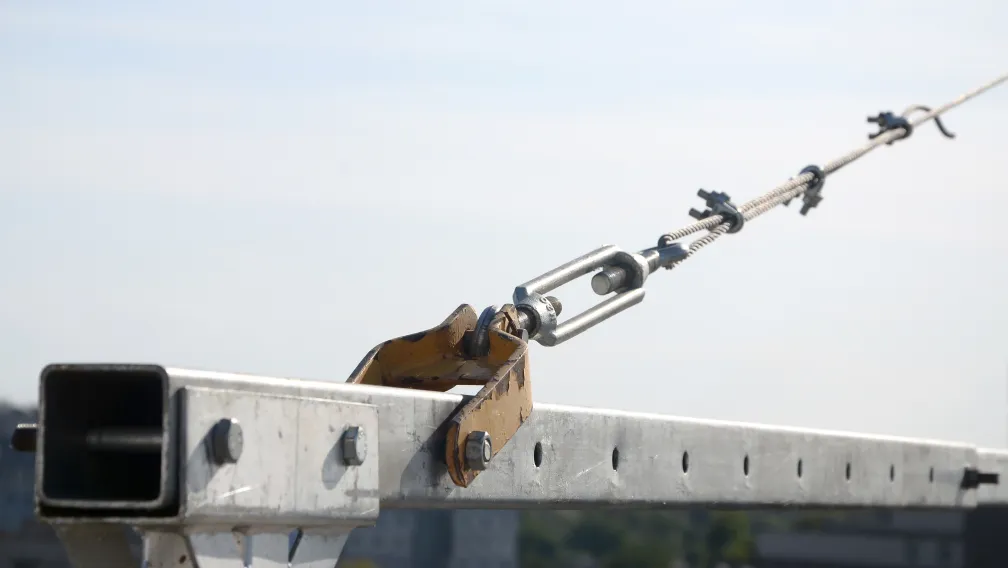
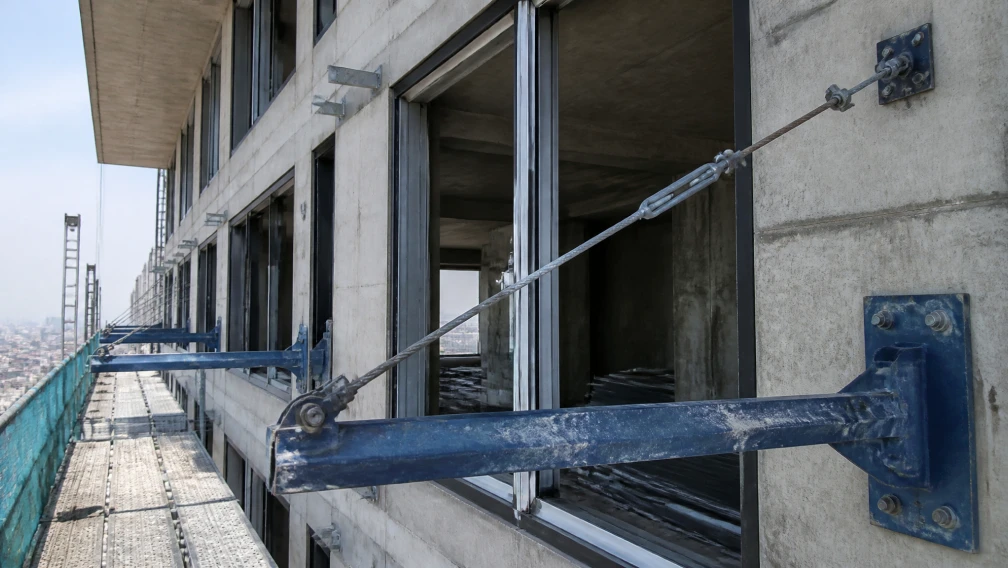
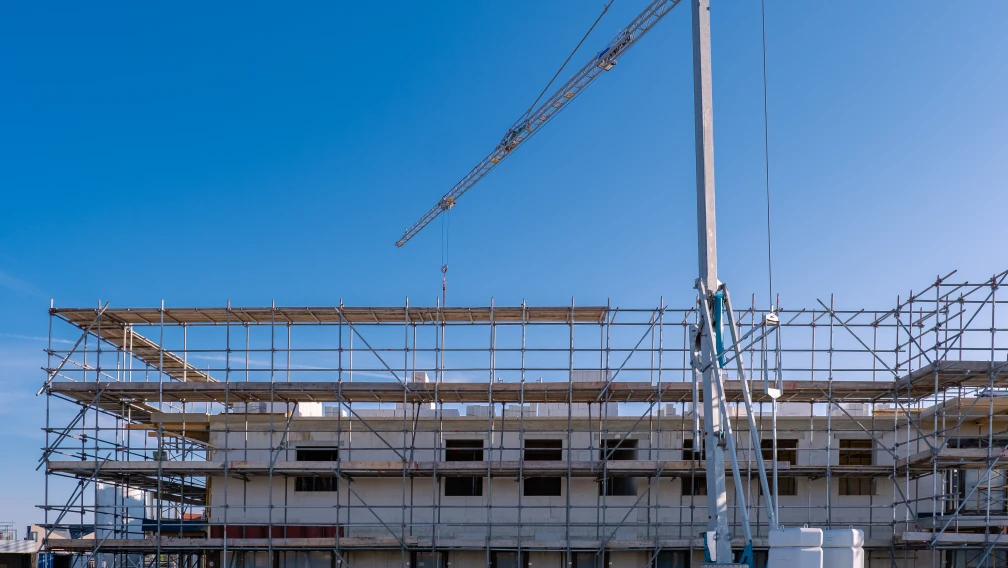
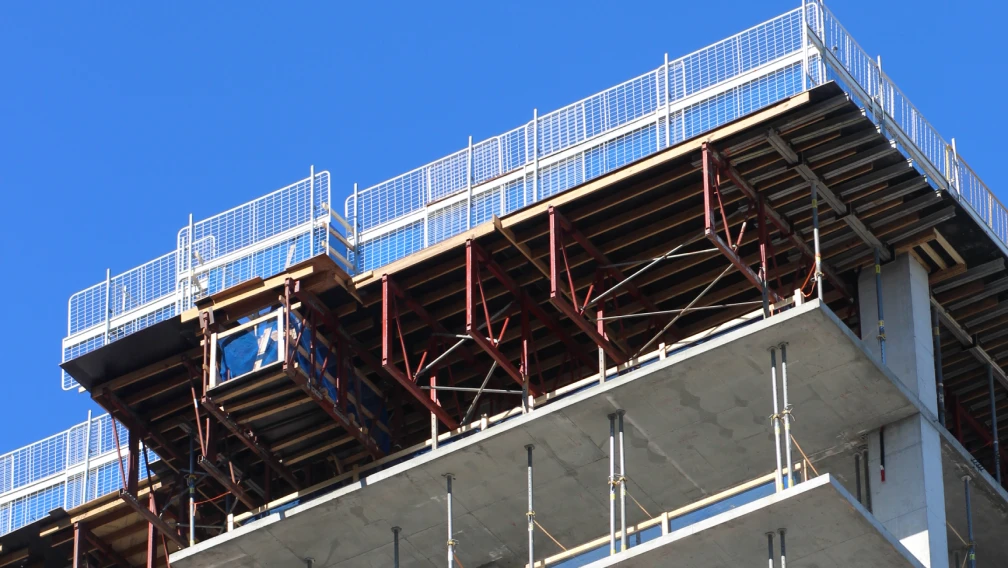
A cantilever scaffold tie rod is an inclined steel-bar member that ties the outer end of the cantilever beam back to the structural beam on the floor above. It's set at an angle, pinned to an embedded anchor at each end, and drawn tight with a turnbuckle. That tension pulls up on the beam's free end and carries the load into the structure above, so the beam isn't left to fight the scaffold weight in pure bending. On site you'll hear it called an inclined tie rod, a diagonal pull rod, or a flower-basket tie rod, after the turnbuckle in the middle.
What's in the assembly
A complete tie-rod set is a few parts working together, and each one has a job.
| Part | Role | Typical spec |
|---|---|---|
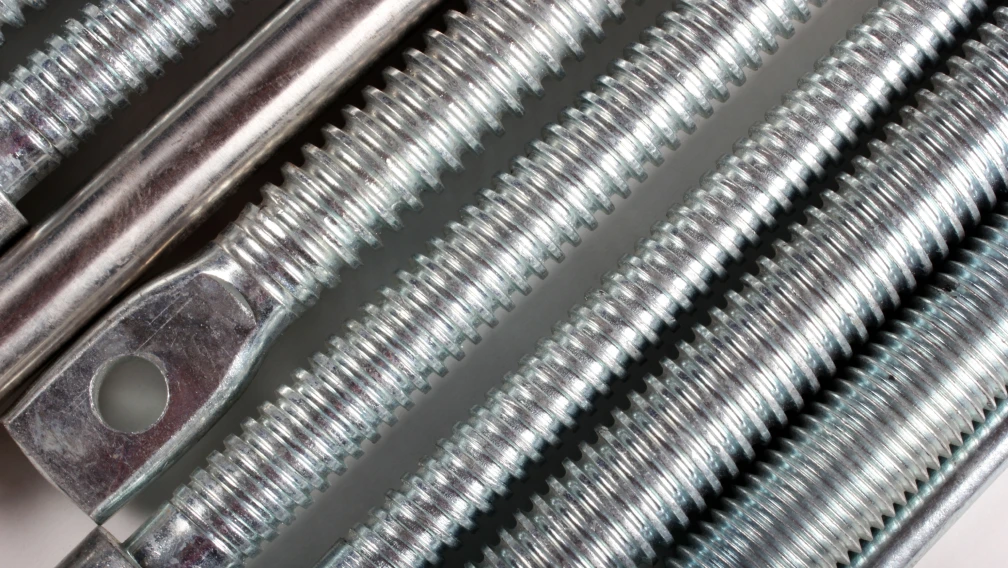
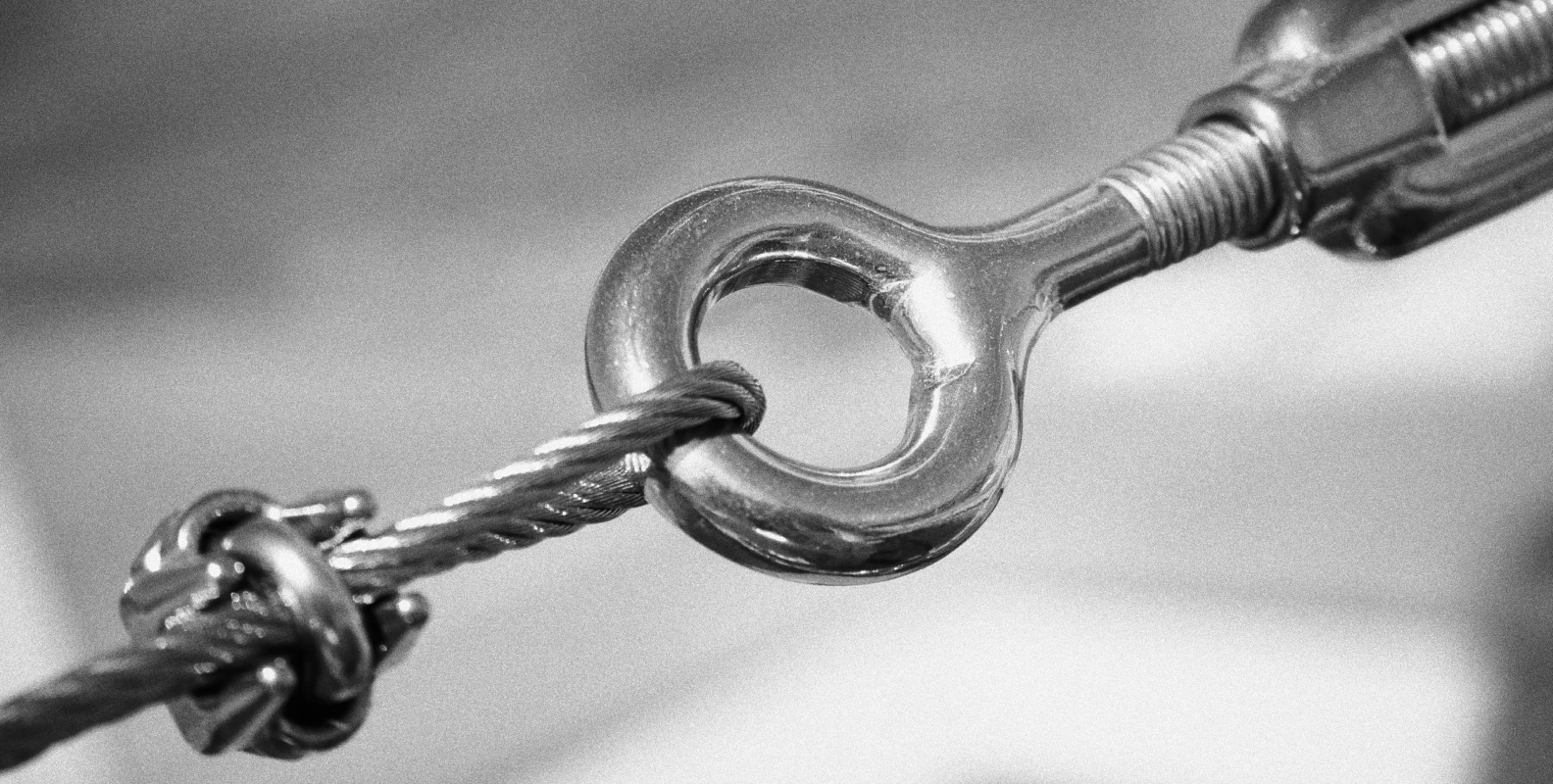
| Forward / reverse threaded rod | The tension member; opposite-hand threads at each end let you tighten by turning the middle | Ø18-20 Q235 round steel, galvanized |
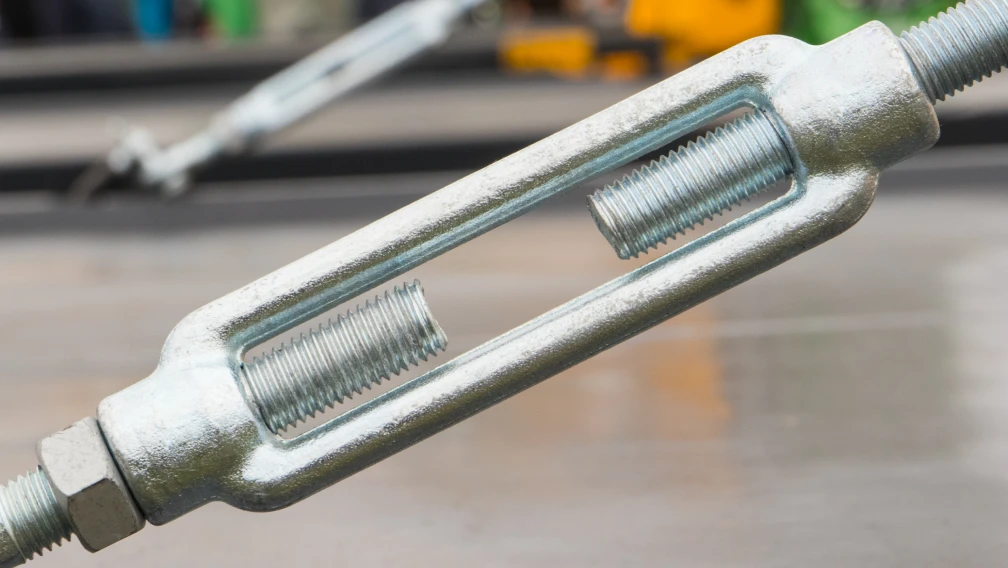
| Closed-body turnbuckle | Draws the rod tight and fine-tunes length; the closed body resists loosening under vibration | Matched to rod diameter, set take-up |
| Thread protection sleeve | Keeps the threads clean so the rod still adjusts weeks later | Slips over the exposed thread |
| Twin-ear anchor | Connects each rod end to the embedded point with a pin; backs out later for reuse | M20×125 half-embed, M20×225 through-wall, M24×275 reinforced |
| Upper embedded insert | Cast into the structural beam above so the rod's top end pins on | 145 mm, placed before the floor pour |
| Axle pin and cotter | Locks each connection and comes apart clean on dismantling | Sized to the anchor |
The forward/reverse thread is the detail worth understanding. Because one end is right-hand and the other is left-hand, spinning the turnbuckle draws both ends in at once, so a crew can tension the rod in place without turning the whole bar. It's the same trick structural tie rods have used for a century, sized down for scaffold work.
Why the tie rod replaced the wire rope
Older cantilever frames unloaded the beam end with steel wire rope, and the practice had real problems. The rope had to be cast into the concrete, which made it hard to pull later and usually meant cutting or burning it out at the end. It couldn't be reused, and wastage ran past 30%. Worse, when crews welded a bent plate to the top and bolted that to the side beam, the pull angle came out inconsistent, so the rope couldn't fully tension the cantilever beam. That's a safety problem hiding in plain sight.
The tie rod fixes this by being bolted and pinned instead of cast, and adjustable instead of fixed. Nothing gets buried, so nothing needs cutting. You can set the length and angle on site, then back the anchor out afterward for the plastering and brick crews. Because the parts come off clean and standardized, one kit turns over across many positions and many buildings. That reuse is most of the economic case: swapping the buried beam and wire rope for the embedded bolt and tie rod is what lets the modern system cut steel use by well over half, with figures of 50% to 56% reported against the traditional method.
Factor | Steel wire rope (old) | Adjustable tie rod (modern) |
|---|---|---|
| Connection | Cast into concrete | Bolted and pinned |
| Length / angle | Fixed; cut to fit each spot | Adjustable on site |
| Removal | Cut or burn out | Unpin and back out the anchor |
| Reuse | Poor; 30%+ wastage | High turnover, standardized |
| Tension control | Uneven if plate is welded off-angle | Set to spec with the turnbuckle |

The numbers that matter
Treat these as the working baseline behind a project design, since the rod size always comes from the load calc.
- Rod: Ø18-20 Q235 round steel, hot-dip galvanized, with forward/reverse (right-hand/left-hand) threads. Ø20 is common.
- Angle: set the rod at 45° or steeper to the horizontal beam. Below that the tension does less lifting and more sideways pull.
- Tension: tighten the turnbuckle to load state, at a torque of about 110 N·m. That's what takes the beam's outer end into load.
- Upper anchor: the 145 mm insert goes in before the floor above is poured; the rod is connected and tensioned only after that concrete reaches 75% of design strength, roughly 72 hours.
- Beam pairing: the rod ties the outer end of beams projecting under about 1.8 m. Longer beams get a temporary prop during erection as well, pulled once the rod is tight.
Angle and corners: where crews get caught
The old welded-plate method failed because the tie angle was whatever the plate happened to give. If the embed lands a little off, a fixed fitting pulls the rod out of line and the beam never fully tensions. The fix is rotatable, adjustable-angle fittings at the rod ends, plus adjustable-angle beams, so the rod pulls true no matter where the anchor sits. For facades that step in and out, external-corner fittings keep the tie working around the corner instead of fighting it.
This adjustability is also what makes the kit economical. When the rod length and angle can flex, one standardized set covers dozens of positions and moves between buildings. The moment you have to cut a bespoke rod for every spot, as crews did with wire rope, procurement and storage costs climb and turnover collapses. Adjustable parts are what turn a pile of tie rods into a reusable system.
How to spec a tie-rod kit
Start with the rod diameter, which follows the load and the beam it serves. From there the checks are practical. Insist on a real hot-dip galvanized finish, because these rods sit outdoors for months and rusted threads won't adjust. Check thread quality on the rod and turnbuckle for the same reason. A closed-body turnbuckle holds tension better than an open frame under site vibration. Make sure the twin-ear anchor, pin, and rod diameter all match, and that the anchor is the back-out type so finishing trades can reuse the opening. If the building has corners or setbacks, add the rotatable fittings up front. And ask for load test reports, not just a spec sheet.
One sourcing note from experience: buy the rod, turnbuckle, anchor, and pins as a matched set from one maker. Thread pitch and hole sizes that come from three suppliers rarely fit clean, and a crew fighting a mismatched turnbuckle at height is exactly the situation this system was meant to end.
Surface treatment: what survives the second project
Tie rods and turnbuckles live outdoors, threaded, and under tension - the worst combination for corrosion. The finish you specify decides whether the kit serves one project or ten. Electro-galvanized (bright zinc) hardware looks clean on arrival and is the cheapest option, but the coating runs 5-8 microns and fails within months on coastal or high-humidity sites, after which the threads corrode and the turnbuckle body seizes. Hot-dip galvanizing at 45-85 microns costs more per set and leaves a rougher surface, yet the threads stay workable for years if they are greased before storage. Painted rods are acceptable only for single-project indoor work. For any kit intended to leapfrog up one tower and then ship to the next job, hot-dip galvanizing on the bodies and a grease-able thread are the specification that pays back. Ask suppliers to state the coating thickness and the salt-spray hours behind it; "galvanized" without a number is a marketing word.
Proof loading and the paperwork that comes with it
A tie-rod assembly is a lifting-adjacent component: it holds a loaded platform over a drop. Treat its certification accordingly. A credible supplier proof-loads each production batch to a multiple of the working load - commonly twice the rated tension - and can show the test rig, the batch records, and the failure points from type testing. The paperwork set for an export order should include the mill certificate for the rod steel (grade 8.8 fastener stock or equivalent), the batch proof-load report, and a dimensional drawing that matches what is actually in the crate. Two red flags to watch: test certificates that quote a different diameter or thread pitch than the delivered goods, and "type test" reports older than the supplier's current production line. When the assembly includes closed-body turnbuckles, the turnbuckle body itself should carry a stamped batch mark that matches the certificate - an unmarked body is untraceable the day something goes wrong. For full selection logic across the wider kit, the companion tie-rod and turnbuckle selection guide covers diameters, angles, and anchoring layouts in more detail.
Inspection and reuse between tiers
The leapfrog rhythm that makes cantilever scaffolding economical depends on one discipline: every component is inspected at ground level between moves. For tie rods and turnbuckles, the ground check takes under a minute per set and looks at four things. Thread condition - any stretched, crossed, or corroded thread rejects the rod. Body deformation - a bent turnbuckle body or an elongated eye has been overloaded and is scrap. Free movement - the turnbuckle should run its full travel by hand after cleaning; one that needs a wrench is already corroding inside. And markings - the grade stamp and batch mark must still be legible, because an unmarked rod cannot be certified for reuse. Sets that pass get cleaned, greased, and tagged back into stock; sets that fail get cut or defaced so they cannot drift back into the pile. Crews that skip this step discover the failures at height, with the tower crane booked and the pour cycle waiting.
Sizing the assembly to the beam and the load
Tie-rod diameter follows beam size and tier load, not habit. For the common 16# I-beam carrying a standard facade tier, an M20 grade 8.8 rod set is the working baseline; 18# beams, longer projections beyond 1.8 m, or tiers carrying material storage move the specification to M22 and often to a double-rod arrangement per beam position. The turnbuckle and every pin in the chain must carry the same rating as the rod - a kit is only as strong as its weakest stamped component, which is why mixed-source assemblies are a false economy. The anchor side matters equally: the twin-ear anchor that connects rod to beam, and the cast-in sleeve at the slab, both have their own rated values, and the assembly drawing should show the governing capacity at each link, not just the rod diameter.
Substitutions to reject at delivery
Three substitutions recur in tie-rod supply and each is worth a rejection clause in the purchase order. Lower-grade rod stock: grade 4.8 rods in place of grade 8.8 look identical until the stamp is checked, and they carry roughly half the tension. Short-threaded turnbuckles: bodies with less thread engagement than the drawing allow run out of adjustment travel before the rod reaches design tension, leaving the tier loose. And unmarked eyes and pins: components without grade or batch stamps cannot be traced, certified, or reused with confidence. A ten-minute receiving inspection - stamps, thread travel, a tape measure against the drawing - filters all three before the kit ever leaves the ground.
Installation labor: tie-rod method versus embedded rings
The labor comparison is where the modern assembly wins its argument. An embedded U-ring anchor has to be positioned, tied, and cast with the slab - work that belongs to the concrete crew and happens whether the scaffold needs it or not - and the beam then has to thread into the rings, shim level, and wedge tight. A scaffold tie rod set installs from below after the slab has cured: drill-free, shim-free, and tensioned with a torque wrench in minutes per position. Field reports from residential towers put the saving at roughly one to two crew-days per beam layer, plus the elimination of the rebar-fixing conflicts that embedded rings create in congested edge beams. The tie-rod method also removes a demolition step: there are no cast-in rings to burn off and patch over when the facade closes.
Packing and export details worth specifying
Small hardware is where export orders lose money in transit. Specify the packing, or receive a container of loose, rusted, thread-damaged iron. Rod sets should ship bundled by length with thread protectors or grease and wrap on every threaded end; turnbuckles boxed or bagged by type with desiccant if the route crosses the tropics; sleeves and small parts in counted bags labeled to match the bill of quantities. Each bundle or box carries a tag with the specification, quantity, and batch number, so the receiving crew can verify the shipment against the packing list without opening every package. Weight per bundle matters too - manual unloading limits sit around 25 kg per lift on most sites, and a supplier who packs to that limit saves you a forklift argument at the destination port. These details cost little at origin and are expensive to fix at destination, which is why experienced buyers write them into the purchase order rather than hoping for them.
Storage discipline between projects
A tie-rod kit that is inspected, cleaned, and then dumped in a yard corner has only delayed its failure by one project. Store rods horizontally on racks, off the ground, sorted by length and diameter; vertical storage bends long rods over time, and ground contact restarts the corrosion the inspection just removed. Turnbuckles travel best wound to mid-travel, greased, and bagged - fully closed bodies trap moisture, fully open ones invite thread damage. Keep a written stock card per kit: set counts, sizes, and the project history of each batch. The card turns ordering for the next tower into a stock-take rather than a guess, and it is the record that tells you when a batch has earned retirement after its design cycles. Hardware treated this way routinely serves five to ten projects; hardware thrown in a bin rarely serves three. Salt air shortens every interval above: on coastal projects halve the storage inspection period, regrease threads at every move, and expect zinc coatings to age roughly twice as fast as inland. Budgeting a small annual replacement percentage for pins and clips keeps the kit complete without emergency orders.
Get a matched tie-rod kit
We manufacture the full tie-rod set for cantilever scaffolds, forward/reverse rods, closed-body turnbuckles, twin-ear anchors, pins, and the rotatable corner fittings, and we ship them matched and thread-checked. Send us the beam size, projection, and facade details, and we'll spec rod diameter and lengths, in galvanized finish with test reports. Samples and OEM supply are available through our contact page.
Frequently asked questions
What does a tie rod do in a cantilever scaffold?
It ties the outer end of the cantilever beam back to the structural beam above, at an angle, and is tensioned with a turnbuckle. That tension carries the beam's free end into the structure so the beam doesn't have to resist the full scaffold load in bending. It's the part that lets the beam stay short and stay outside the building.
What size and material is the tie rod?
Most cantilever tie rods are Ø18-20 Q235 round steel with a hot-dip galvanized finish, Ø20 being common. The rod has forward and reverse threads, one end right-hand and one left-hand, so the turnbuckle tensions both ends at once. The exact diameter comes from the project load calc.
What angle and tension should the tie rod have?
Set it at 45° or steeper to the horizontal beam and tighten the turnbuckle to load state, around 110 N·m of torque. A shallower angle wastes tension on sideways pull, and under-tensioning leaves the beam sagging under load.
Why use a tie rod instead of a steel wire rope?
Wire rope had to be cast into the concrete, was cut out at the end, couldn't be reused, and wasted more than 30%. Welded-plate connections also gave inconsistent tie angles that left the beam under-tensioned. A tie rod is bolted and pinned, adjustable for length and angle, and reusable, which removes those problems and lowers cost per use.
Can the tie rod and anchor be reused?
Yes. The rod, turnbuckle, and pins come off clean, and the twin-ear anchor is a back-out type, so the embedded opening frees up for the plastering and brick crews and the hardware moves to the next job. That turnover is the main economic reason the modern kit replaced wire rope.
What is the closed-body turnbuckle for?
It draws the rod tight and fine-tunes its length, and its closed body resists loosening under the vibration a live scaffold sees. Rotating it pulls both threaded ends in at once, which is how the rod gets tensioned in place without turning the whole bar.
Does every cantilever beam need a tie rod?
In the modern embedded system the outer end of each beam is tied back, so yes, each beam in the layer gets a rod. Beams projecting under about 1.8 m are carried by the tie rod alone once tensioned; longer beams also get a temporary prop during erection as well, removed after the rod is tight.
-

Lengge
Cantilever Scaffolding System Manufacturer
Lengge is a China-based factory producing cantilever I-beams, tie rods, couplers, embedded parts and full scaffolding accessories. We supply contractors, wholesalers and rental companies in over 50 countries from our own production facility in Hebei.