LANGUAGE


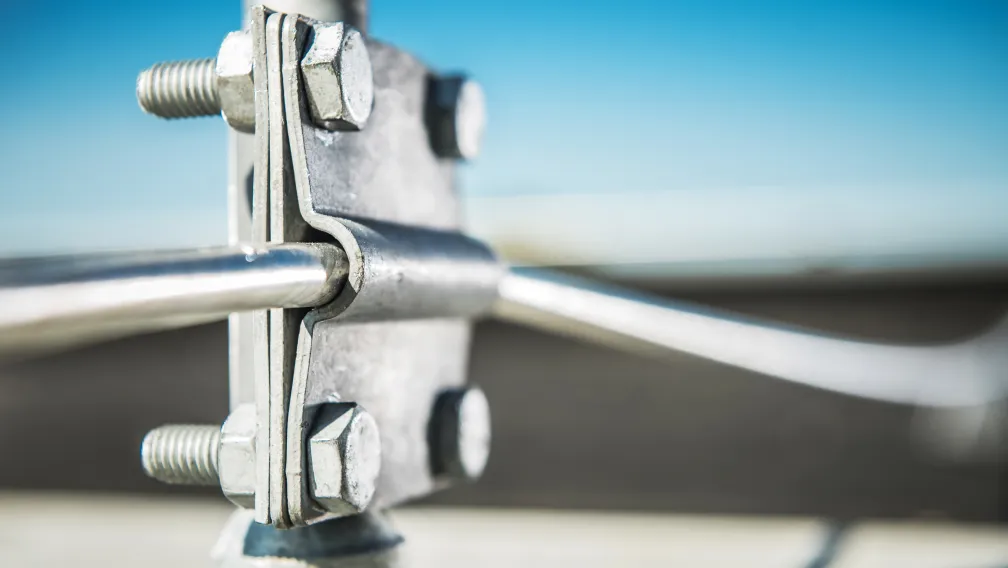
The structural integrity of a tube-and-fitting scaffold network relies exclusively on the mechanical clamping force generated by its couplers. When engineers design load-bearing temporary structures, they must select fittings capable of sustaining dynamic construction loads without yielding, slipping, or fracturing. Procurement managers and temporary works designers are consistently faced with a fundamental material choice: drop-forged or pressed steel scaffolding fittings. The selection dictates the scaffold clamp load capacity, the overall safety margin of the structure, and the operational lifespan of the rental fleet.
This technical guide examines the specific metallurgical differences between drop-forging and steel stamping processes. It details how these manufacturing methods directly impact the EN 74 load class ratings, cruciform bending resistance, and long-term durability. By analyzing the structural mechanics of both fitting types, project managers can align their procurement strategies with exact site requirements, balancing upfront capital expenditure against ultimate load-bearing performance.
Direct Answer: What is the difference between drop-forged and pressed steel scaffold fittings?
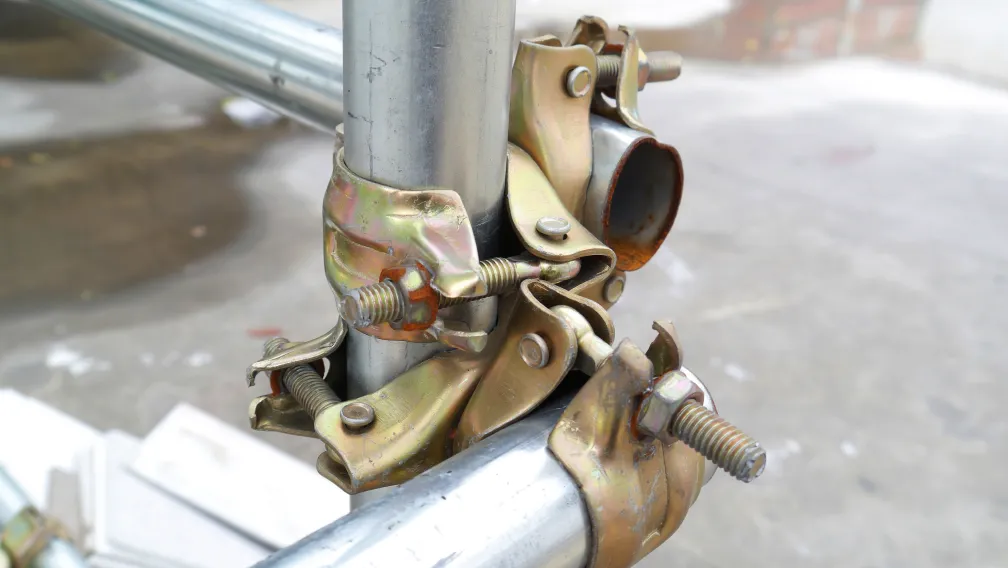
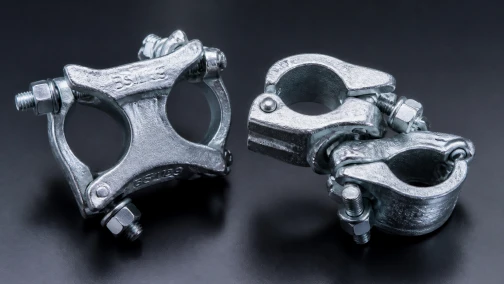
The primary difference lies in the manufacturing process and the resulting structural density. Drop-forged scaffold couplers are manufactured by heating raw steel billets and hammering them into closed dies under immense pressure. This process aligns the internal metallic grain structure to the exact shape of the fitting, producing a highly rigid, dense component capable of withstanding Class B slip loads (25 kN) and severe dynamic impacts without deformation. Pressed steel scaffolding fittings are cold-formed from steel coil or sheet using heavy stamping presses. While lighter and more cost-effective, pressed steel fittings exhibit a sheared grain structure and are typically rated for lighter Class A slip loads (15 kN). Drop-forged fittings are mandated for heavy falsework, suspended bridging, and primary load-bearing nodes, whereas pressed steel variants are deployed for standard facade access, temporary edge protection, and non-structural tie-ins.
Metallurgical Mechanics: The Drop-Forging Process
Drop-forging represents the premium standard in scaffolding hardware fabrication. The process begins with high-grade carbon steel round bars (typically Q235 or Q345 equivalents) which are cut into precise billets. These billets are heated in an induction furnace to approximately 1,200°C, rendering the steel highly malleable but still entirely solid. The white-hot steel is transferred to a drop hammer or a mechanical forging press equipped with closed precision dies.
As the massive hammer strikes the billet, the extreme pressure forces the steel to flow into the cavities of the die. This is the critical metallurgical advantage: the continuous internal grain structure of the steel is not cut or broken; rather, it is plastically deformed to follow the exact contours of the coupler body. This unbroken grain flow provides exceptional tensile strength, impact toughness, and resistance to metal fatigue. Furthermore, the immense compressive force eliminates internal microscopic voids or porosity within the steel. The resulting drop-forged body is fundamentally rigid, meaning the "ears" of the coupler (where the T-bolt sits) will not bend inward when subjected to extreme tightening torque or heavy in-service loads.
Cold-Forming Mechanics: The Steel Pressing Process
Pressed steel scaffolding fittings are manufactured using an entirely different philosophy focused on high-volume efficiency and material economy. The raw material consists of heavy-gauge structural steel coil, typically 4.0 mm to 5.0 mm thick. The coil is fed into a progressive stamping press operating at ambient room temperature.
The press utilizes a series of hardened steel dies to punch, bend, and fold the flat sheet into the three-dimensional shape of a scaffold coupler. Because this is a cold-forming process, it induces severe mechanical stress at the folding radii. The metallic grain structure is physically sheared at the cut edges and stretched at the bending points. While the cold-working process does induce a degree of work-hardening that increases localized tensile strength, it simultaneously reduces the overall ductility of the component. The inherent limitation of a pressed steel fitting is geometric distortion. Under extreme load, the relatively thin steel plates can act as levers; the ears holding the bolt can gradually bend inward toward the tube, resulting in a loss of clamping friction and eventual slip failure.
Load Capacities and EN 74 Slip Ratings
The ultimate metric for any scaffold coupler is its slip resistance—the amount of axial force required to push the clamped fitting down the steel tube. The European standard EN 74-1 provides the governing classification system, dividing structural right-angle couplers into Class A and Class B based on their tested slip capacity.
Pressed steel fittings are predominantly engineered to meet EN 74 Class A requirements. During laboratory slip testing, a Class A fitting must sustain a minimum load of 15 kN without sliding along the test mandrel. Applying the standard safety factor, this translates to a Safe Working Load (SWL) of 6.1 kN per fitting. This capacity is perfectly adequate for supporting standard pedestrian working platforms, lightweight facade scaffolds, and debris netting frameworks.
Conversely, drop-forged scaffold couplers are almost universally engineered to meet EN 74 Class B requirements. A Class B fitting must withstand a massive 25 kN slip force during testing, yielding a site SWL of 9.1 kN. Achieving a 25 kN slip resistance requires the coupler to exert an immense, unrelenting crushing force on the scaffold tube. Pressed steel bodies generally deform before reaching this clamping threshold, whereas the solid mass of a drop-forged body maintains its rigid geometry, ensuring the friction grip remains intact under heavy material loads, concrete formwork shoring, and complex suspended cantilevers.
Cruciform Bending and Torsional Rigidity
While slip resistance addresses vertical gravity loads, scaffold grids are constantly subjected to lateral forces from wind shear, crane impacts, and asymmetrical loading. These forces attempt to twist the right-angle connection out of its strict 90-degree alignment. This resistance is measured via the EN 74 cruciform bending test.
Drop-forged fittings excel in torsional rigidity. The dense, solid spine connecting the two halves of a forged double coupler resists rotational deformation exponentially better than the folded spine of a pressed fitting. When a pressed steel coupler is subjected to severe cruciform bending, the stamped steel plates can pry apart or warp, compromising the structural matrix of the scaffold grid. For freestanding access towers or heavy-duty load-bearing falsework lacking continuous diagonal bracing, the high cruciform stiffness of drop-forged fittings is a critical structural prerequisite.
Application Specifics: Beam Clamps and Sleeve Couplers
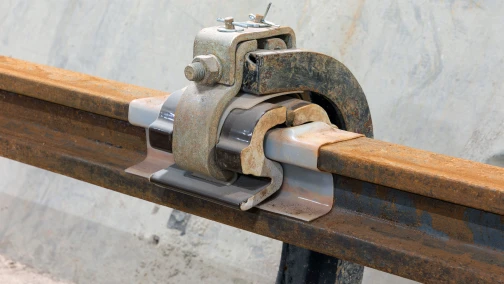
The distinction between forging and pressing becomes absolute in specialized scaffold components. For example, a scaffold beam clamp (gravlock coupler) is used to suspend scaffold tubes directly from the flanges of structural steel I-beams. These fittings carry primary suspension loads where a single failure results in an immediate localized collapse. Consequently, legitimate scaffold beam clamps are exclusively drop-forged. The jaw of the clamp must bite into the steel flange with absolute rigidity; a pressed steel jaw would simply unbend and release the flange under heavy suspension loads.
Similarly, the choice of material impacts splice connections. A scaffold sleeve coupler is utilized to join two tubes end-to-end. While pressed steel sleeve couplers are common for joining vertical standards operating strictly in compression, drop-forged sleeve couplers are mandated for joining horizontal ledgers subjected to bending moments, or tie-tubes operating in axial tension. The rigid forged body prevents the spliced joint from bowing under transverse loads, ensuring the continuous transfer of force across the scaffold network.
Tightening Torque and Deformation Memory
Both EN 74 Class A and Class B load ratings are contingent upon the T-bolts being tightened to a specific torque, universally designated as 50 Nm. On a busy construction site, scaffolders routinely utilize pneumatic or battery-powered impact wrenches, often over-torquing bolts to 70 Nm or higher.
When a drop-forged fitting is over-torqued, the robust forged ears easily absorb the excess force. The weak link becomes the T-bolt itself, which will stretch or snap before the forged body yields, allowing for an easy bolt replacement. However, when a pressed steel fitting is repeatedly over-torqued, the stamped ears physically bend inward. Because pressed steel lacks elastic memory, this deformation is permanent. The next time the fitting is used, the bolt will not seat squarely on the deformed ear, causing severe eccentric stress on the thread and preventing the coupler from achieving its designated slip resistance. This makes drop-forged fittings vastly superior for minimizing operational damage.
Lifecycle Costs and Fleet Management ROI
The procurement decision between forged and pressed fittings fundamentally impacts the Return on Investment (ROI) for scaffold rental fleets. Pressed steel fittings present a lower initial capital expenditure (CAPEX). They are cheaper to manufacture, and their lighter weight (averaging 0.8 kg per double coupler compared to 1.1 kg for forged) marginally reduces bulk shipping and localized transport costs.
However, the operational expenditure (OPEX) and fleet depreciation metrics heavily favor drop-forged components. Forged fittings survive the brutal realities of site handling—being dropped from height, struck with scaffold spanners, and subjected to uncontrolled impact wrenches—with minimal attrition. A high-quality drop-forged fitting galvanized to ISO 1461 standards routinely delivers a functional rental lifespan exceeding 15 years. Pressed steel fleets suffer significantly higher attrition rates due to crushed bodies, bent ears, and warped spines, necessitating constant culling and replacement. For long-term fleet management, drop-forged fittings provide a lower Total Cost of Ownership (TCO).
Procurement Verification and Fraud Prevention
When specifying drop-forged scaffold fittings for heavy-duty projects, procurement managers must implement strict verification protocols. Visual inspection alone is insufficient, as heavily galvanized pressed fittings can sometimes mimic the bulky appearance of forged variants to an untrained eye.
- Weight Tolerances: Enforce strict minimum weight per piece. A legitimate EN 74 Class B drop-forged double coupler typically weighs between 1.05 kg and 1.15 kg. Fraudulent suppliers may hollow out the forging dies to save steel, compromising the slip rating.
- Permanent Markings: Verify that the letters "EN 74", the load class ("B"), the manufacturer's mark, and the year of manufacture are permanently embossed into the forged steel body, not merely stamped lightly or printed on the surface.
- Mill Certificates: Demand batch-specific mill certificates tracing the raw steel billets used in the forging process, ensuring the metallurgy meets the required Q235 or Q345 structural equivalents.
- Type Test Reports: Require unredacted laboratory test reports from accredited bodies (e.g., SGS, TUV) confirming the exact fitting model passes the EN 74-1 25 kN slip test without physical yielding.
Working with Lengge
Lengge is a premier manufacturer of fully certified drop-forged and pressed steel scaffold fittings, supplying Tier-1 construction firms, industrial maintenance contractors, and major scaffold rental fleets worldwide. Our Hebei production facility utilizes closed-die induction forging, robotic welding, and automated thread rolling to produce fittings that unconditionally guarantee Class B load ratings and extreme operational longevity.
Whether your project requires lightweight pressed steel fittings for rapid facade enclosure or heavy-duty drop-forged couplers for critical bridging and suspended falsework, our engineering team provides exact load data and structural certification. Send your procurement schedule, required load classes, and volume requirements through our contact page to receive a comprehensive technical proposal and competitive factory-direct quotation.
-

Lengge
Cantilever Scaffolding System Manufacturer
Lengge is a China-based factory producing cantilever I-beams, tie rods, couplers, embedded parts and full scaffolding accessories. We supply contractors, wholesalers and rental companies in over 50 countries from our own production facility in Hebei.