LANGUAGE


The aerodynamic threat to high-rise staging platforms
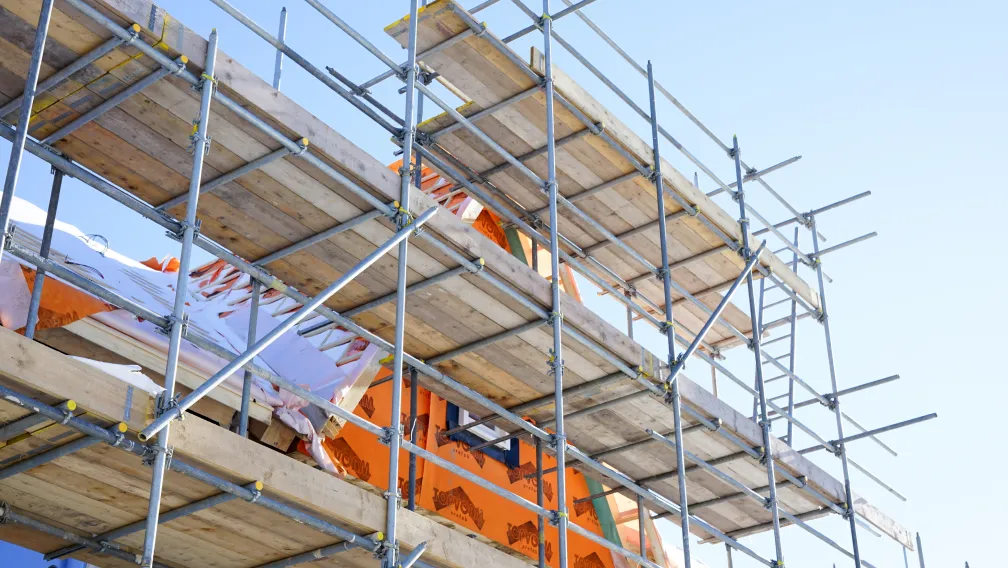
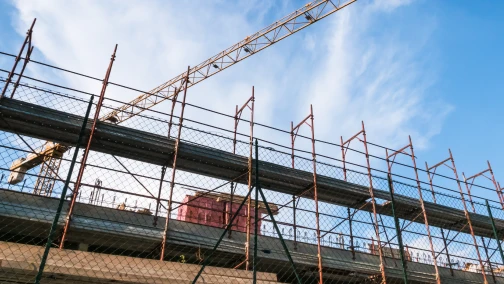
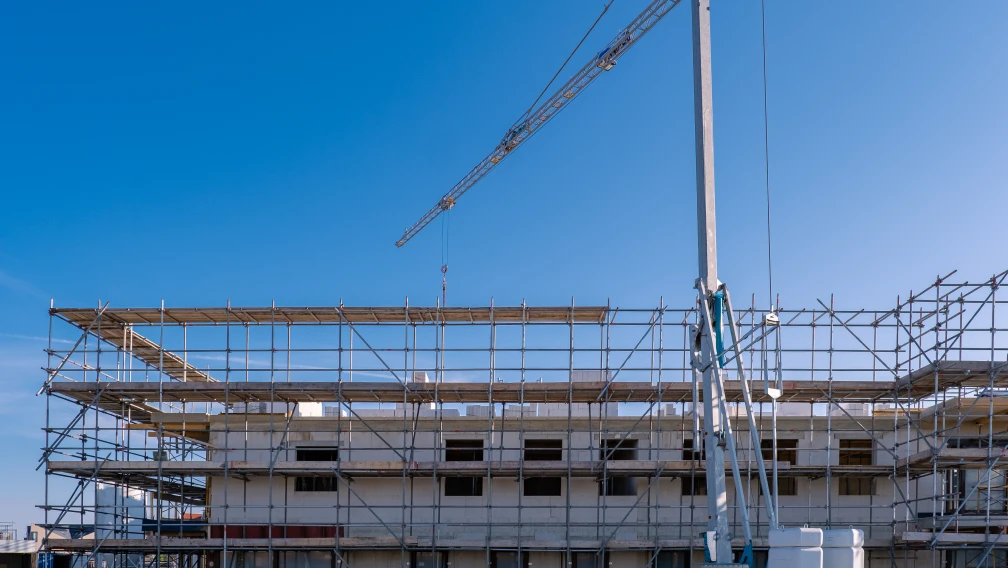
Working platforms on high-rise building facades operate in extreme micro-climates. Wind striking a flat building exterior accelerates dramatically as it forces its way around the architectural edges. This aerodynamic behavior creates severe low-pressure zones immediately above the exposed scaffolding platforms. According to Bernoulli’s principle, this pressure differential generates massive upward aerodynamic lift, physically pulling upward on the horizontal scaffold boards.
Standard timber scaffold boards complying with BS 2482 standards weigh approximately 15 to 20 kilograms, depending on their exact moisture content and length. Without mechanical restraint, a localized wind gust exceeding 80 kilometers per hour generates sufficient uplift force to flip these boards out of position, dropping them onto pedestrian zones below or leaving gaping fall hazards in the working deck. Site engineers resolve this aerodynamic threat by clamping every board securely to the underlying horizontal ledgers and transoms utilizing a board retaining coupler (BRC). This specialized fitting translates mechanical clamping force into permanent upward restraint, ensuring platform integrity during severe weather events.
Direct Answer: What is a board retaining coupler?
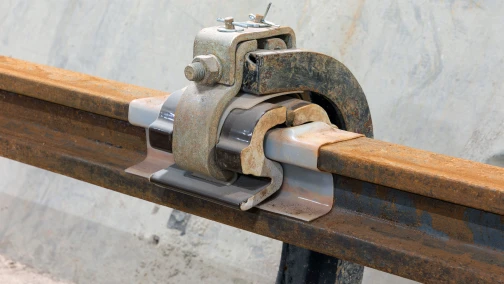
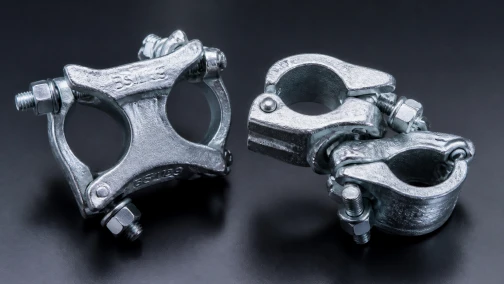
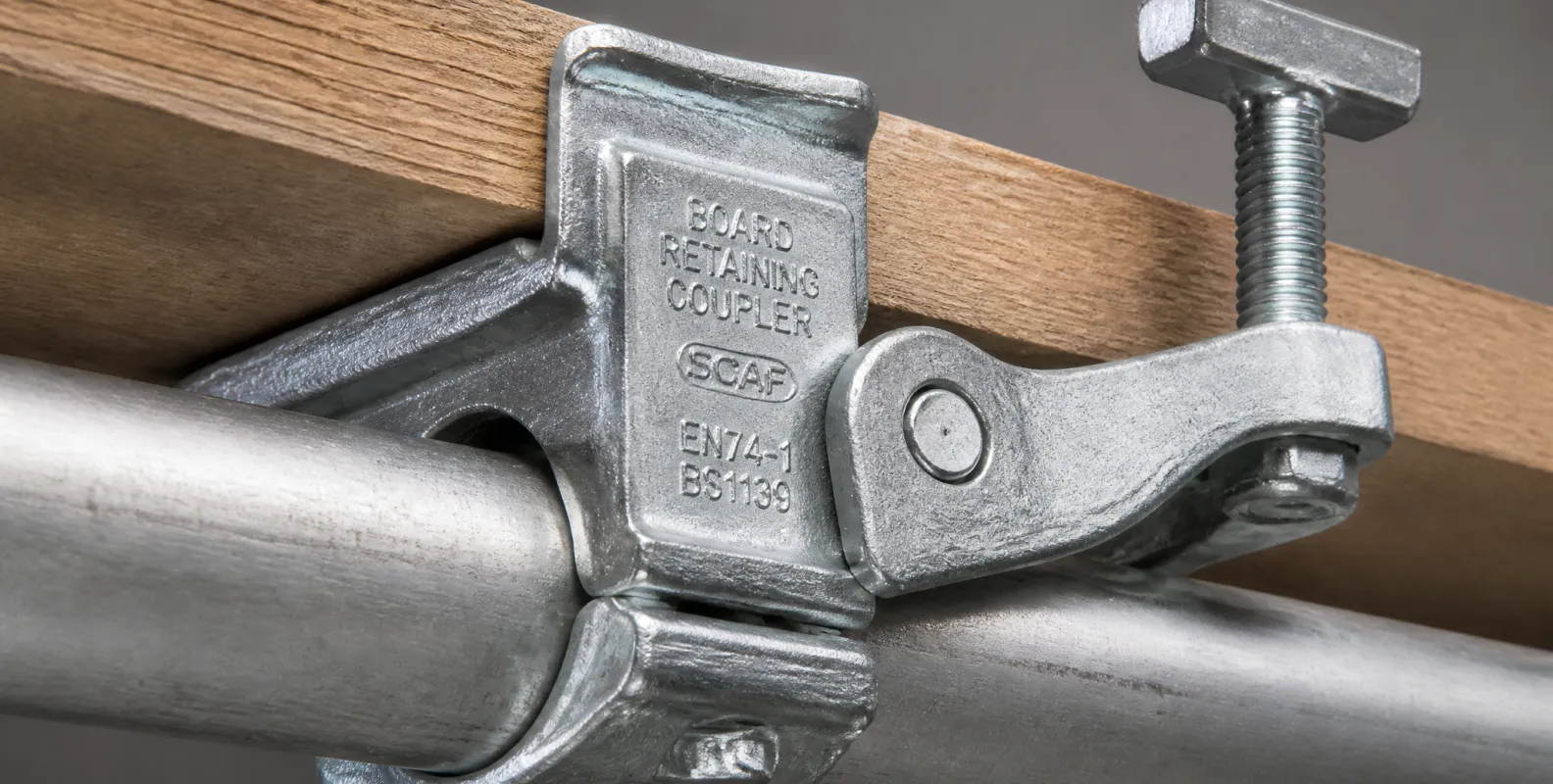
A board retaining coupler is a specialized scaffolding fitting designed to clamp timber or steel scaffold boards directly to the underlying 48.3mm structural tubes (transoms). It consists of a formed steel lower bracket that wraps under the scaffold tube, connected via a Grade 8.8 T-bolt to an upper restraining arm that hooks securely over the top edge of the scaffold board. Operating purely as a safety restraint rather than a primary load-bearing structural node, it prevents boards from shifting laterally under worker traffic and eliminates the risk of wind uplift flipping the decking materials.
Eliminating obsolete and hazardous fastening methods
Before the standardization of board retaining couplers, scaffolding crews secured timber decks using destructive or temporary methods. The most common practice involved lashing the boards to the transoms using 16-gauge galvanized tying wire. Wire lashing presents severe safety deficits. Cyclic vibrations from worker traffic stretch the wire over time, introducing dangerous slack. Furthermore, the sharp twisted ends of the wire create severe puncture hazards for workers moving across the deck.
Another obsolete practice involves hammering steel nails directly through the timber board into wooden wedges driven into the scaffold tubes. Nailing destroys the structural integrity of the timber board. The penetration point introduces a pathway for rainwater, accelerating internal rot. It splits the timber grain, degrading the board’s capacity to handle standard distributed loads. Board retaining couplers bypass these issues entirely. They provide a high-tension, completely non-destructive mechanical clamp that leaves the timber cellular structure intact, maximizing the rental lifespan of the scaffolding boards.
The anatomical design of the board retaining clamp
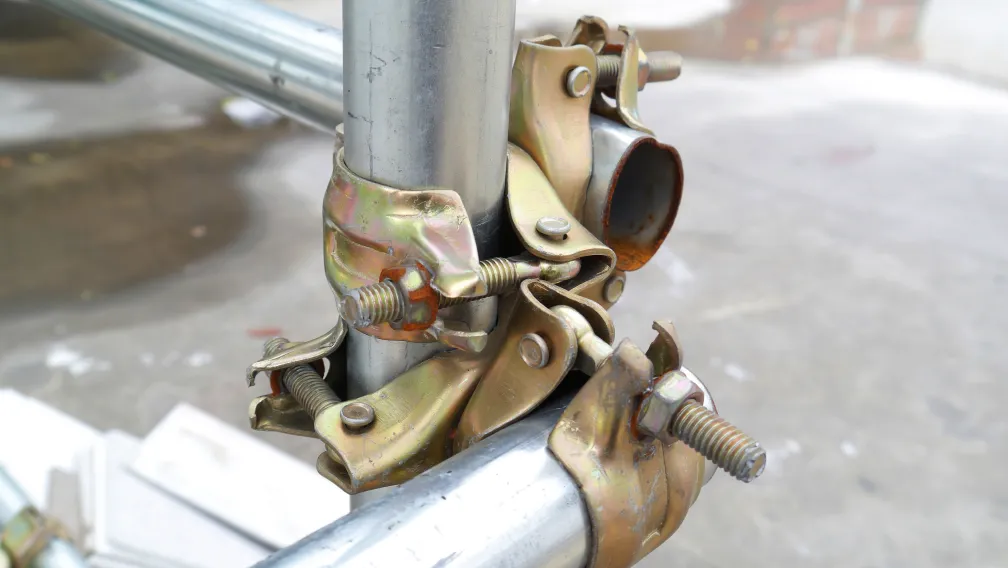
The engineering geometry of a board retaining coupler matches its specific function. Unlike a scaffold double coupler, which wraps two tubes, the BRC grips one tube and one flat surface.
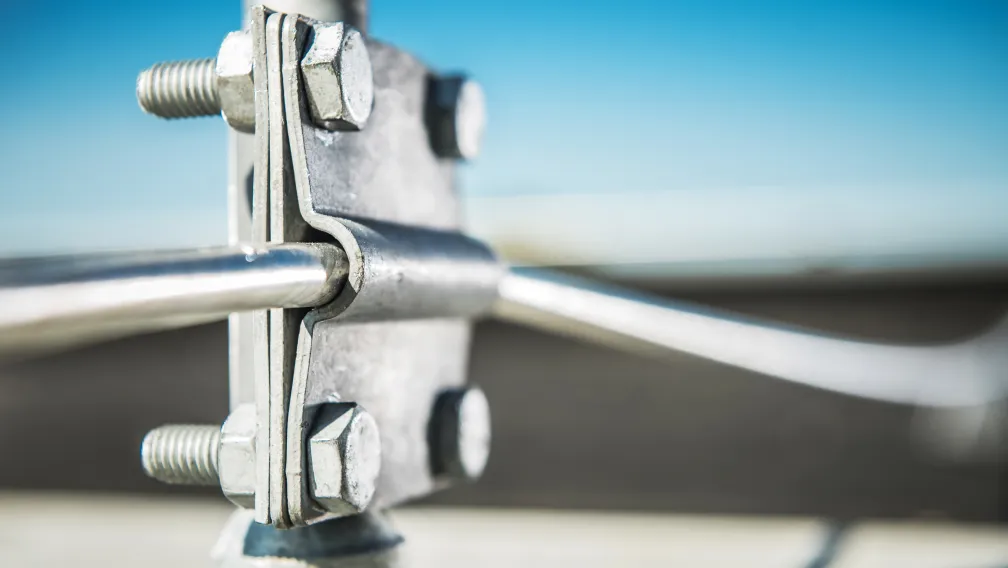
The lower half features a semi-circular saddle that matches the exact 48.3mm outside diameter of a standard scaffolding tube. The upper half consists of a flat, elongated steel plate terminating in a downward-facing hooked lip. The flat section rests horizontally across the top of the timber board, while the lip hooks tightly over the board's edge. A single high-tensile T-bolt passes through both halves. As the worker tightens the nut, the upper lip is drawn downward, compressing the timber board firmly against the steel transom below. This single-bolt operation allows rapid installation and dismantling while guaranteeing a uniform clamping pressure across the board's edge.
Dimensional tolerances and board thickness compatibility
Scaffolding decks utilize various materials across different global regions. The physical depth of the BRC's retaining lip determines its compatibility with these materials. Procurement managers must match the coupler design to the specific thickness of their decking inventory.
| Decking Material Type | Standard Thickness | Compatibility / Clamping Requirement |
|---|---|---|
| BS 2482 Timber Scaffold Board | 38 mm | Standard BRC application; upper lip must span 38mm. |
| Heavy-Duty Timber (North America) | 50 mm (2-inch nominal) | Requires a deep-lip BRC design to accommodate extra thickness. |
| Galvanized Steel Planks | 38 mm to 63 mm | Compatible, but requires strict torque control to prevent denting the hollow steel profile. |
| Laminated Veneer Lumber (LVL) | 38 mm or 42 mm | Standard application; LVL resists localized crushing better than solid sawn timber. |
Attempting to use a standard 38mm BRC on a 50mm heavy-duty board results in the upper lip failing to hook over the edge properly. The bolt will bend under tension, and the clamp will slide off during structural vibration. Suppliers typically offer two distinct lip depth models to cover the entire spectrum of global scaffolding boards.
The engineering justification for pressed steel manufacturing
While primary load-bearing connections must utilize drop-forged steel, board retaining couplers belong to a different mechanical category. A BRC does not bear the massive compressive gravity loads of the staging structure, nor does it hold the scaffold matrix together. It functions exclusively as a localized restraint to hold a flat board down against wind uplift and horizontal shifting.
Therefore, producing BRCs from high-grade pressed steel is completely acceptable under international engineering codes (such as EN 74). Manufacturers stamp these couplers from 4mm or 5mm thick carbon steel plate (typically Q235B grade). The stamping process folds the steel to create strengthening ribs along the upper arm, granting it high resistance to bending. Utilizing pressed steel dramatically lowers the per-unit weight and manufacturing cost without compromising the safety function of the component. B2B buyers should reject attempts by suppliers to upcharge for drop-forged BRCs, as the mechanical benefit over 5mm pressed steel in this specific application is negligible.
Fastener metallurgy and controlled installation torque
The clamping force relies on the central T-bolt. BRCs utilize Grade 8.8 high-tensile steel bolts to ensure the threads do not strip under tension. However, the installation torque rules for BRCs differ drastically from structural scaffolding nodes.
A structural connection requires 50 Nm of torque. Applying 50 Nm to a board retaining coupler causes severe mechanical damage to the timber deck. The high clamping pressure forces the steel retaining arm to crush the cellular structure of the wood, indenting the board and fracturing the timber grain. This crushing weakens the board’s span capacity and creates a depression where rainwater pools and accelerates rotting.
Site engineers mandate a reduced installation torque for BRCs, typically restricted to 20 Nm to 30 Nm. This is generally defined as "spanner tight without extreme leverage." The goal is to generate sufficient friction to lock the board against the tube without crushing the wood fibers. The use of pneumatic impact wrenches on board retaining couplers is strictly forbidden, as they guarantee instantaneous timber damage.
Mitigating moisture content fluctuations and timber shrinkage
Wood is a hygroscopic material. It absorbs moisture from the atmosphere and expands, and it releases moisture in direct sunlight and shrinks. During a long-term facade project spanning multiple seasons, the thickness of a timber scaffold board fluctuates.
A board installed and clamped during a rainy winter will shrink by 1mm to 2mm as the summer heat dries it out. This shrinkage introduces microscopic slack into the BRC connection. The board begins to rattle under foot traffic. Site safety protocols dictate that scaffold inspectors must conduct a tactile check of all board retaining couplers during the transition into dry seasons. A quick quarter-turn of the T-bolt nut restores the required tension, eliminating the slack caused by timber dehydration.
Dynamic load vibrations and horizontal displacement
Beyond wind uplift, the working platform experiences severe dynamic vibrations. Masons roll heavy wheelbarrows filled with wet mortar across the boards. Crane operators land pallets of bricks onto the staging area. These heavy, rolling point loads cause the timber boards to flex downward and rebound instantly.
This continuous cyclic flexing acts as an engine for horizontal displacement. Without BRCs, the boards "walk" along the transoms, eventually sliding apart and creating gaps wide enough for a worker's foot to fall through. The BRC locks the exact horizontal coordinate of every board. By clamping the board to the steel tube, the coupler forces the steel framework to absorb the vibration, completely arresting any horizontal migration of the decking material.
Interaction with scaffold overhang rules and lap joints
Scaffolding codes dictate strict dimensional rules regarding how far a board can overhang a support tube. In standard practice, a board must extend past the transom by a minimum of 50mm, but no more than 150mm. An overhang exceeding 150mm creates a "trapdoor effect." If a worker steps on the extended tip, the board acts as a seesaw and flips upward.
To manage continuous runs, boards are often lapped (overlapped) over a shared central transom. Board retaining couplers are explicitly designed to secure these lap joints. The upper hook of the BRC locks over the top board, while the clamping pressure compresses both the top and bottom boards simultaneously against the steel tube. This ensures that the lap joint remains tight, preventing the lower board from sagging and eliminating the trip hazard caused by an uneven lap transition.
Integration with safety toe-boards and fall protection
Working platforms require continuous toe-boards (kicker boards) installed along the outer perimeter. OSHA 1926.451 regulations mandate that toe-boards possess a minimum vertical height of 3.5 inches (approximately 90mm) to prevent dropped tools, loose bolts, and masonry debris from falling off the edge.
The installation of toe-boards relies directly on the stability of the underlying deck. If the primary scaffold boards are warped or lifting at the edges, a gap forms beneath the toe-board. A dropped hammer can easily slide through a 20mm gap and strike a pedestrian below. Board retaining couplers hold the perimeter boards perfectly flat against the transoms. This allows the vertical toe-board to sit flush against the deck, creating an impenetrable seal against falling debris. Some contractors utilize specialized BRC models featuring extended vertical plates that simultaneously clamp the flat board and provide an upright channel to slot the toe-board into place.
Mitigating trip hazards on active working decks
Any steel component protruding above the surface of a walking platform presents an inherent trip hazard. Traditional internal joint pins or protruding bolts cause continuous interference with the smooth rolling of material trolleys and wheelbarrows.
Manufacturers engineer BRCs with a distinct low-profile architecture. The upper retaining arm is stamped flat, sitting just a few millimeters above the timber surface. The T-bolt is inserted from the top down, placing the smooth, rounded head of the bolt on the walking surface, while the tightening nut sits safely below the deck, hidden underneath the scaffold tube. This inverted bolt design allows wheelbarrows to roll smoothly over the joint without catching, drastically reducing localized tripping incidents on highly congested construction decks.
Industrial plant safety: The petrochemical fire risk
In heavy industrial environments, particularly petrochemical refineries and natural gas processing facilities, plant managers strictly forbid the use of combustible or meltable materials on temporary structures. Budget scaffolding contractors sometimes attempt to secure scaffold boards using heavy-duty industrial plastic zip-ties to save installation time.
During a localized flash fire, plastic zip-ties melt instantly. If the platform is exposed to extreme heat, the zip-ties fail, the boards drop or warp out of position, and the escaping workers lose their emergency egress route. Drop-forged or pressed steel board retaining couplers are mandatory in these environments. Steel maintains its mechanical clamping force up to 600°C, ensuring the working deck remains physically intact and fully navigable during an industrial fire evacuation.
Connecting tubular transoms and cantilever outriggers
Board securing procedures change depending on the underlying structural layout. In a standard supported scaffold, the transoms are spaced every 1.2 meters. A standard 3.9-meter scaffold board crosses four support tubes. Engineering best practices mandate placing a BRC at both the extreme ends of the board, and at least one intermediate support.
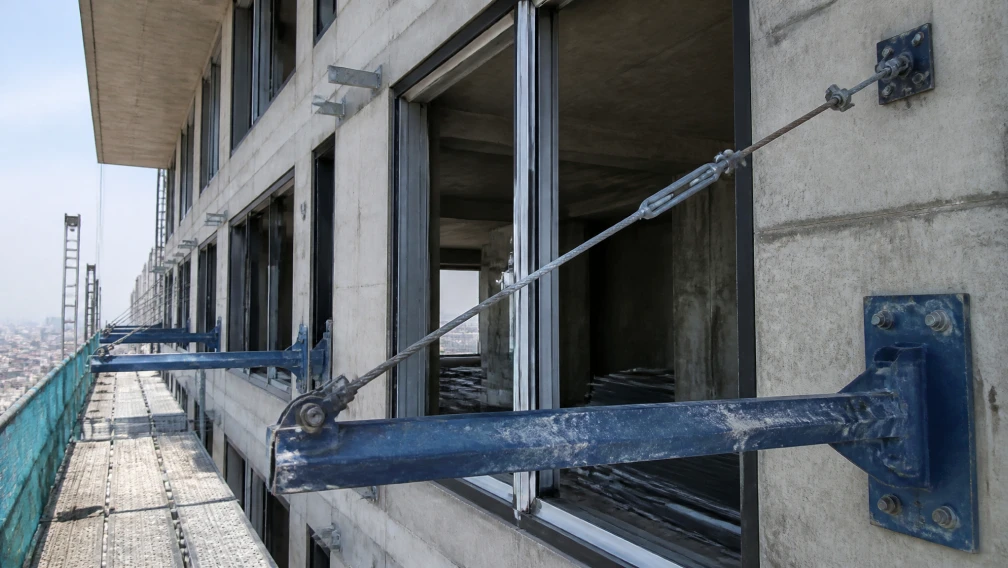
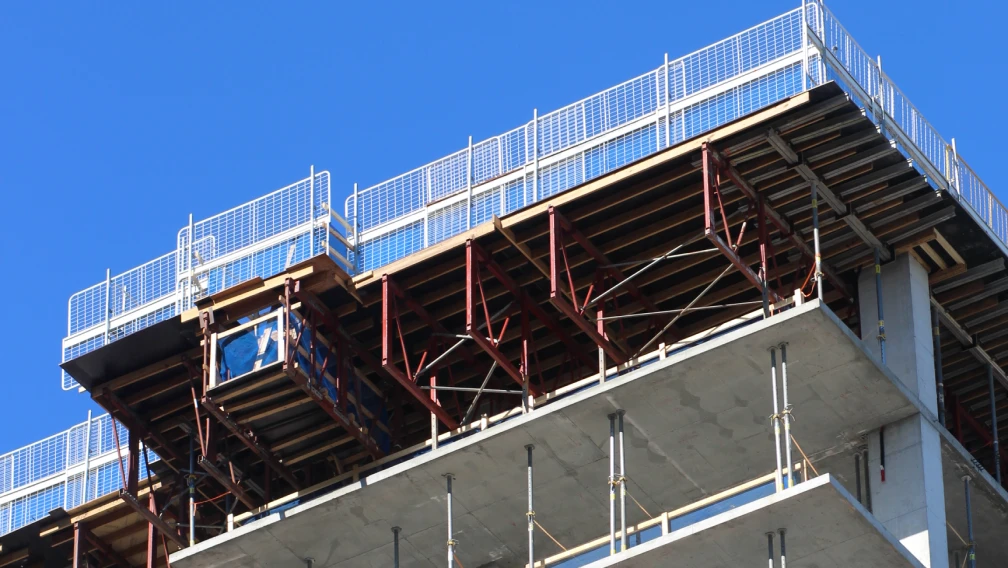
When decking over a cantilever scaffolding network, the requirements intensify. Cantilever platforms are exposed directly to the highest wind shear zones at the extreme outer edges of the building profile. Standard 1.2-meter spacing is often reduced. Site engineers may require a BRC on every single intersection point between the board and the underlying cantilever I-beams to prevent the extreme upward gusts from tearing the decking away from the steel framework.
The structural superiority over internal joint pins in horizontal spans
Workers must not confuse the role of a BRC with the role of a structural connection. A BRC secures a flat board. When joining two actual steel scaffolding tubes end-to-end horizontally along a ledger run, site crews must deploy a drop-forged scaffold sleeve coupler.
Using a standard internal joint pin on a horizontal run creates a weak hinge that will sag under load. The heavy-duty external sleeve coupler wraps around the tube gap, providing rigid resistance to bending moments and tension. Once the horizontal steel framework is securely locked by these sleeve couplers, the timber boards are laid over the top, and the BRCs are applied to finish the deck. The BRC relies on the sleeve coupler to keep the underlying steel matrix perfectly straight.
Surface treatments: Electro-galvanizing vs. hot-dip galvanizing
Scaffolding boards are frequently exposed to heavy rain, holding moisture against the steel components long after the weather clears. The surface treatment of the BRC dictates its operational lifespan before rust freezes the bolt threads.
Electro-galvanizing (EG) applies a thin, 10-micron layer of zinc. Because BRCs are relatively cheap components, EG is the industry standard. It provides sufficient rust protection for standard urban construction projects. However, the abrasive action of dragging timber boards eventually scrapes the thin zinc layer off the top retaining arm.
For offshore oil platforms, maritime bridge repairs, and highly corrosive chemical plants, buyers must upgrade to Hot-Dip Galvanized (HDG) board retaining couplers. The HDG process applies a thick 60-80 micron zinc-iron alloy coating. This heavy-duty barrier withstands aggressive coastal salt-fog and severe abrasion, ensuring the T-bolt can be unthreaded easily even after a massive two-year offshore staging project concludes.
Site inspection and Scafftag tagging protocols
Before a scaffold network receives a green Scafftag indicating it is safe for general use, the site safety inspector executes a stringent audit of the decking layout. The inspector walks the entire platform, actively attempting to kick the boards laterally and pull them upward.
The inspection checklist requires verifying that no board overhangs its support by more than 150mm. The inspector checks the torque on random BRCs to ensure the timber is not crushed, yet the clamp is unmovable by bare hands. Any missing BRC at a board lap joint results in an immediate red tag, shutting down the platform until the connection is restored. High-visibility yellow or red paint is sometimes applied to the BRCs at the factory to allow inspectors to verify their presence rapidly from a distance.
Procurement metrics: Weight, steel gauge, and fake detection
The international scaffolding trade involves a race to the lowest unit cost. Unverified suppliers cheat on BRC manufacturing by utilizing extreme negative tolerances on the steel thickness. A high-quality pressed steel BRC requires a 4mm to 5mm carbon steel plate to prevent the upper retaining arm from bending backward under wind uplift.
Suppliers executing fraud will stamp the couplers from 2.5mm or 3.0mm steel sheet. This reduces the raw material cost significantly but creates a deadly defect. The thin upper arm simply bends open when the wind pulls upward on the board, releasing the deck. B2B buyers detect this fraud through strict weight mandates. A standard high-quality BRC weighs approximately 0.60 kg to 0.65 kg. If a supplier submits a quotation for a BRC weighing 0.45 kg, they are utilizing dangerously thin steel. Procurement contracts must specify actual scaled weight per sack rather than just theoretical piece counts.
Calculating BRC volume for major facade projects
Logistics planners estimate BRC requirements using precise area arithmetic based on the scaffolding grid. The calculation depends on the number of boards wide the platform is, and the spacing of the support transoms.
Assume a standard working platform is 5 boards wide, and the transoms are spaced every 1.2 meters. Each 3.9-meter board requires at least 3 BRCs (two ends, one middle). Therefore, a single 3.9-meter bay (covering 5 boards) requires 15 BRCs. A massive facade spanning 100 meters horizontally and 10 working lifts vertically contains over 250 bays. This translates to an immediate requirement of nearly 4,000 board retaining couplers. Planners automatically add a 10% to 15% attrition margin to the order, as these small components are frequently lost in the mud, accidentally discarded with timber waste, or stolen from the jobsite.
Evaluating specialized anti-theft and captive-bolt designs
The high attrition rate of scaffolding couplers costs rental companies massive sums annually. To combat component loss, premium BRC designs feature captive bolts. The threaded end of the T-bolt is slightly deformed (peened) at the factory after the nut is threaded on. This prevents the worker from unscrewing the nut completely off the bolt.
During dismantling, the worker loosens the nut just enough to slide the BRC off the tube, but the nut, bolt, and clamp remain as a single physical unit. This eliminates the common issue of loose nuts vibrating off during transit and entire sacks of clamps becoming useless because the fasteners were lost in the gravel. Captive-bolt designs carry a minor price premium but deliver a massive return on investment by retaining fleet integrity across multiple project lifecycles.
Connect with our engineering team for certified decking security
Lengge Steel manufactures heavy-duty scaffolding connections, delivering precision-stamped board retaining couplers, certified double couplers, and heavy structural scaffolding systems to the global construction market. Our BRCs feature 5mm thick Q235B steel plate, captive Grade 8.8 T-bolts, and low-profile anti-trip designs. We enforce strict weight tolerances to guarantee mechanical resistance against severe wind uplift. Submit your decking dimensions, required surface treatments (EG or HDG), and bulk volume requirements to our engineering desk for a comprehensive wholesale quotation. Visit our contact page to secure your high-performance scaffolding inventory today.
Frequently Asked Questions
If the wind uplift pressure is 1.2 kPa on a high-rise deck, will a standard BRC hold a scaffolding board?
A standard scaffolding board (225mm wide) spanning a 1.2m gap presents a surface area of 0.27 square meters. Multiplying 1.2 kPa by 0.27 sq.m generates a localized uplift force of 0.324 kN. A standard heavy-duty board retaining coupler is engineered with a safe working load (SWL) typically exceeding 3.0 kN. Therefore, the BRC possesses nearly ten times the required strength to hold the board securely against severe wind gusts.
Why shouldn't I use pneumatic impact wrenches to install a board retaining coupler?
Pneumatic impact wrenches easily deliver over 100 Nm of torque in seconds. While this is dangerous for structural steel components, it is devastating for timber. A BRC requires a maximum of 30 Nm. Applying 100 Nm causes the steel retaining lip to instantly crush the wood cells, fracturing the timber grain, degrading the board’s load capacity, and creating a depression that collects rainwater and accelerates rotting.
Are pressed steel board retaining couplers weaker than drop-forged versions?
For this specific application, no. A board retaining coupler does not hold the scaffold structure together or bear compressive gravity loads. It functions strictly to hold a flat board down against wind uplift and lateral shifting. High-quality pressed steel (4mm to 5mm thick) provides massive resistance to these specific forces. Drop-forging offers no practical mechanical advantage for a decking restraint and unnecessarily increases the unit cost.
How do board retaining couplers interact with scaffolding toe-boards?
Toe-boards must sit completely flush against the working deck to prevent tools and debris from falling through the perimeter gap. If boards are unsecured, they warp and create hazardous gaps. BRCs lock the boards perfectly flat against the transoms, allowing the vertical toe-boards to create an impenetrable, compliant safety seal along the platform edge.
What is the maximum allowable overhang for a scaffold board, and how does the BRC secure it?
Safety regulations stipulate that a scaffold board must overhang its support transom by a minimum of 50mm, but no more than 150mm to prevent a trapdoor tipping effect. The BRC clamps the board exactly at this designated support node, locking the specific overhang coordinate in place and preventing the board from sliding laterally out of compliance during daily worker traffic.
Can I use a board retaining coupler on galvanized steel planks?
Yes, but extreme torque control must be applied. Steel planks are hollow. If a worker over-tightens the BRC, the steel retaining lip will crush and dent the hollow profile of the plank, destroying its structural geometry. The clamp should only be tightened until the lock washer is flat, ensuring secure friction without physical deformation.
Why do BRCs feature a low-profile, inverted bolt design?
Any metal protruding above the timber deck creates a severe trip hazard for laborers and interferes with the wheels of material trolleys. The inverted design places the smooth, rounded head of the T-bolt flush on top of the retaining arm, while the bulky tightening nut sits safely below the deck, hidden underneath the scaffold tube. This ensures a smooth, unobstructed walking surface.
How do I detect a fraudulent, substandard board retaining coupler?
Check the actual scaled weight. A high-quality BRC stamped from 4mm or 5mm carbon steel weighs between 0.60 kg and 0.65 kg. Fraudulent suppliers use extreme negative tolerance, pressing the clamps from 2.5mm sheet metal to save raw material costs. These fake clamps often weigh less than 0.45 kg and will bend backward entirely under heavy wind uplift, releasing the boards.
Why are plastic zip-ties banned for securing boards in petrochemical plants?
Plastic zip-ties melt instantly when exposed to localized flash fires or high heat. If a plant emergency occurs, the zip-ties fail, causing the scaffold boards to drop or shift. This destroys the emergency egress route for escaping workers. Steel BRCs maintain their full clamping integrity at high temperatures, ensuring the platform remains navigable during a fire evacuation.
What does a captive bolt design mean on a scaffolding coupler?
A captive bolt features a deliberately deformed (peened) thread at the very end of the bolt shaft. This prevents the worker from unthreading the nut entirely off the bolt during dismantling. The clamp can be loosened enough to remove it from the tube, but the nut, bolt, and bracket remain permanently attached as one unit. This eliminates the massive financial loss caused by loose nuts vibrating off and getting lost in the mud.
-

Lengge
Cantilever Scaffolding System Manufacturer
Lengge is a China-based factory producing cantilever I-beams, tie rods, couplers, embedded parts and full scaffolding accessories. We supply contractors, wholesalers and rental companies in over 50 countries from our own production facility in Hebei.